
You are using an out of date browser. It may not display this or other websites correctly.
You should upgrade or use an alternative browser.
You should upgrade or use an alternative browser.
Price of diesel in your area?
- Thread starter Captain Mainwaring
- Start date
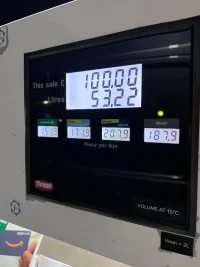

Joke isn't it!
£120 from top of the red. Up about £25-£30 from usual. Always put make belief premium in.Joke isn't it!

No idea. Never pay attention. Just fill and go. It’s great being loaded… 

You’re supposed to pay before you drive off!Just fill and go

Garage near us had £600 worth of fuel nicked in ‘drive offs’ in just one day.
So someone got half a tank for free.
Tip- don’t open a petrol station near a caravan site…You’re supposed to pay before you drive off!
Garage near us had £600 worth of fuel nicked in ‘drive offs’ in just one day.
So someone got half a tank for free.
Had a few tonight btw… hic…


Managed to fill the tank today from empty to full for sixty quid.
Anyway now the mowers full I can cut the grass…
I'm thinking this is how my summer might look;


Especially if you can generate your ownElectrification is the way.

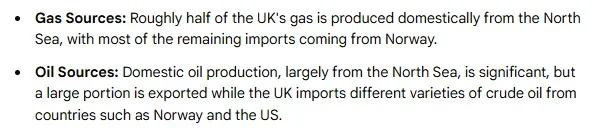
False choice - the North Sea isn't unstable.This is one of those periodic reminders that having an economy substantially reliant on oil and gas which is largely produced in problematic and unstable areas of the world is a really bad idea. Electrification is the way.
False choice - the North Sea isn't unstable.
It's not unstable, however over 90% of recoverable reserves have already been extracted with the remainder being in harder to access reserves which drives breakeven costs of extraction far in excess of what is economically sensible with proven reserves lasting somewhere around seven years. You can therefore invest huge sums of money in extraction of an ever-dwindling supply to kick the can another few years down the road, or you can invest in electrification which offers a long-term drive towards energy self-sufficiency.

Exactly thisFalse choice - the North Sea isn't unstable.

Am sure it'll all settle down again soon
Especially if you can generate your own
You wouldn't think that decades ago we were world leaders in Nuclear powered electricity generation that worked every day of the week regardless of the weather.
The other thing to consider, in addition to the obvious issues with North Sea reserves, is that gas/oil is an international market. Therefore, even if you are technically self-sufficient in oil or gas, you will still get hammered by global events such as this. The obvious current example is the US which is a net exporter of oil but still getting hammered at the pumps (albeit from a lower base cost).
I'm sure I read somewhere today that 90% of the oil transiting the Straits of Hormuz goes to Asian markets.
However, as its a global price, we may not have shortages but still may the high prices.
Globalisation eh ?
However, as its a global price, we may not have shortages but still may the high prices.
Globalisation eh ?
Renewables don't provide a reliable base load and we don't have the large-scale capability to store the intermittent, excess power it can generate, which is why we still need gas/nuclear generation capabilty. NS resources provide the opportunity to bridge the gap whilst large-scale storage capability is developed.It's not unstable, however over 90% of recoverable reserves have already been extracted with the remainder being in harder to access reserves which drives breakeven costs of extraction far in excess of what is economically sensible with proven reserves lasting somewhere around seven years. You can therefore invest huge sums of money in extraction of an ever-dwindling supply to kick the can another few years down the road, or you can invest in electrification which offers a long-term drive towards energy self-sufficiency.
If what you say about NS reserves and the cost of extraction were true, there'd be no need to impose an exploration/drilling embargo, but it isn't, so they do. What we actually have is a self-fulfilling ideology - prevent exploration and then claim there are no known, new reserves... no shit, Sherlock!
I'm sure I read somewhere today that 90% of the oil transiting the Straits of Hormuz goes to Asian markets.
However, as its a global price, we may not have shortages but still may the high prices.
Globalisation eh ?
Exactly, it is a global market because oil is so transportable. Electricity itself obviously rather harder to transport, given you can only do it if you can run a wire...
Renewables don't provide a reliable base load and we don't have the large-scale capability to store the intermittent, excess power it can generate, which is why we still need gas/nuclear generation capabilty. NS resources provide the opportunity to bridge the gap whilst large-scale storage capability is developed.
If what you say about NS reserves and the cost of extraction were true, there'd be no need to impose an exploration/drilling embargo, but it isn't, so they do. What we actually have is a self-fulfilling ideology - prevent exploration and then claim there are no known, new reserves... no shit, Sherlock!
Yep, if you keep hammering away at it you might get lucky and maybe even the most optimistic scenarios may turn out to be conservative. No one seriously thinks the North Sea is anything other than a declining asset though so really you're just talking about the difference between kicking the can down slightly varying lengths of road. In any case, given oil and gas is a global market, it doesn't actually help very much with national energy sufficiency. Therefore, any long term plan ends with a drive towards electrification, so you can either delay the inevitable by flogging a dead horse for a few more years or you can actually get a plan together and crack on with it.
No-one's arguing that it's not a depleting asset - that was self-evidently true, right from the very first barrel extracted - but "kicling the can down the road" would appear eminently sensible given the tech you advocate is not capable of meeting current needs and won't be for a good number of years.Yep, if you keep hammering away at it you might get lucky and maybe even the most optimistic scenarios may turn out to be conservative. No one seriously thinks the North Sea is anything other than a declining asset though so really you're just talking about the difference between kicking the can down slightly varying lengths of road. In any case, given oil and gas is a global market, it doesn't actually help very much with national energy sufficiency. Therefore, any long term plan ends with a drive towards electrification, so you can either delay the inevitable by flogging a dead horse for a few more years or you can actually get a plan together and crack on with it.
Gas isn't globally priced in the way crude is BTW and not being able to keep it (or oil) to ourselves is irrelevant - selling it provides $ that can be used to insulate households from the effects of energy crises or, maybe, help pay for the transition to renewables.
Similar threads
- Replies
- 116
- Views
- 11K

- Replies
- 3
- Views
- 518

- Replies
- 5
- Views
- 2K
