First and foremost have you had some diagnostics plugged in to check the fault codes.
Have you had any previous DPF light / warnings come on? With the diagnosis you can check the soot and ash levels of the DPF, just seems strange you haven’t had anything pre warning come up.
Very weird that there hasn't been any fault codes, but I think I have dodgy map from the previous owner.
The van previously had heavy black smoke under load, especially going up hills. It later got much worse: it started and ran very rough, would barely rev past around 1,500 rpm, and produced a lot of black smoke. After that it became a crank/no-start, occasionally firing briefly but not sustaining running.
I discovered injector #2 had accidentally been fitted with two copper washers. Since then, all injectors have been removed, seats cleaned, correct single washers fitted, and injectors refitted. The #4 high-pressure injector pipe also looked suspect/crooked at the end, so I replaced it with a genuine VAG pipe today. Leak-off rail/lines have also been checked and I’ve been using VCDS fuel pump/bleed routines.
VCDS findings:
Fuel pressure appears strong during cranking/start attempts. In various logs it has built to around 50,000–90,000 kPa. Injection is being commanded and the engine has repeatedly caught briefly, reaching over 1,000 rpm at times, but then dies.
No fault codes are currently showing.
DPF / exhaust pressure findings:
The DPF differential pressure readings looked very high during start attempts with the oxygen sensor fitted. I was seeing spikes in the hundreds of mbar, including around 400–580 mbar during brief firing/cranking attempts.
I then removed/loosened the oxygen sensor before the DPF/cat to create an exhaust bypass. With the oxygen sensor removed, the van started and ran. During that test, DPF pressure readings were much lower, mostly around the low tens of mbar once running.
I refitted the oxygen sensor after trying Mannol DPF foam cleaner. The van still would not start normally, and the DPF pressure again climbed very high during attempts, with readings over 500 mbar seen again.
Other DPF values:
- Soot calculated: 0.00 g
- Soot measured: -4.60 g
- Oil ash mass: 122.74 g
- Time since last regen seen in one log: 7679 minutes
The soot values seem odd/untrustworthy, but the pressure behaviour seems significant. I’m also not sure whether the DPF may have been mapped out previously, so I’m unsure whether a forced regen is even possible or meaningful.
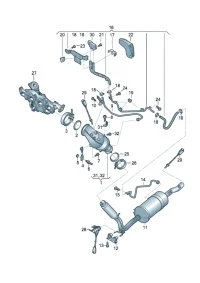
The engine seems capable of starting when exhaust pressure is relieved via the oxygen sensor hole, so I’m now suspecting a serious exhaust restriction downstream of the oxygen sensor, most likely DPF/cat assembly, possibly soot/ash loading or collapsed substrate.
What I'd like to know from those more experience that I is:
- Does the oxygen sensor removal test pretty much confirm an exhaust restriction?
- Would you suspect DPF/cat blockage or collapsed substrate rather than injector/fuel issues now?
- Is 122.74 g oil ash mass significant on this engine?
- Is there any point attempting more in-car cleaner, or is this now an off-car DPF/cat clean/replacement job?
- If the DPF has been mapped out, would forced regen be impossible or unreliable?
With the oxygen sensor fitted, DPF pressure spikes into the hundreds of mbar during start attempts, up to around 580 mbar, and the engine will not sustain running.
With the oxygen sensor removed/loosened before the DPF/cat, the van starts and the DPF pressure drops to roughly low tens of mbar.
So I’m now trying to confirm whether this points conclusively to a blocked/restricted DPF/cat assembly, collapsed substrate, or another exhaust restriction downstream of the oxygen sensor.
Any advice appreciated.