It is to swirl the gas flow so that the adblue mixes in properly, rather than a big wet lump which then crystallises.

You are using an out of date browser. It may not display this or other websites correctly.
You should upgrade or use an alternative browser.
You should upgrade or use an alternative browser.
T6 204 DSG 4Motion DPF removal
- Thread starter Cog Head
- Start date

Good afternoon all
The DPF has had two overnight soakings, and a flush with cold water with added airline, which works a treat, by far the best at clearing the muck out.
Got it all back together and it’s sooo much quieter now, so it’s definitely done something.
It’s currently ticking over on the drive drying the DPF out before I drive it, I know the turbos are quite sensitive to back pressure.
Next step… how do I teach it that it’s has a “new” DPF, or is there a cleaned DPF setting?
Do I need to code in the new particle sensor? There’s no engine light on…?
The DPF has had two overnight soakings, and a flush with cold water with added airline, which works a treat, by far the best at clearing the muck out.
Got it all back together and it’s sooo much quieter now, so it’s definitely done something.
It’s currently ticking over on the drive drying the DPF out before I drive it, I know the turbos are quite sensitive to back pressure.
Next step… how do I teach it that it’s has a “new” DPF, or is there a cleaned DPF setting?
Do I need to code in the new particle sensor? There’s no engine light on…?

VCDS > Select > 01-Engine > Adaptation > IDE07903-Adaptation of ash massNext step… how do I teach it that it’s has a “new” DPF, or is there a cleaned DPF setting?
For a new DPF you would enter 0 grams. For a cleaned DPF perhaps 10 grams (would equal to 20000 miles. Anyways, I don't think it really matters.
No coding needed.Do I need to code in the new particle sensor? There’s no engine light on…?
Well, in the DPF there surely is no soot to burn. Personally I wouldn't bother. Instead I would run the EGR test to capture the new pressure readings across the DPFWould it be worth doing a manual a regen?


So it seems - inevitable P0401.
Well, visited a VW garage to be tested - the van had accumulated 30 events in ECU's memory since July 2021 (since 20 months now). Eventually managed turn on the emission light at event number 31 - thus had a priviledge to have EGR flow tested. The result - pending - the ODIS went to an unending loop without a concluding result.
Meanwhile, I think I have reproduced the EGR flow test using VCDS. However, I don't have any reference value to estimate the degree of EGR cooler blockage. Neither did ODIS tell the reference value (should have told but the computer...
Well, visited a VW garage to be tested - the van had accumulated 30 events in ECU's memory since July 2021 (since 20 months now). Eventually managed turn on the emission light at event number 31 - thus had a priviledge to have EGR flow tested. The result - pending - the ODIS went to an unending loop without a concluding result.
Meanwhile, I think I have reproduced the EGR flow test using VCDS. However, I don't have any reference value to estimate the degree of EGR cooler blockage. Neither did ODIS tell the reference value (should have told but the computer...
- mmi
- egr p040100 t6_measured
- Replies: 84
- Forum: Engine, Gearbox, Exhaust, Drivetrain

Hi all,
Just been reading your messages regarding T6 DPF cleaning, I'm in a similar situation, got a niggling DPF code flagging up (P226D), had it in for a forced regen at the local garage but code came straight back unfortunately, so I'm looking to hopefully give mine a clean myself, to find out if I actually need a new DPF or not. I was wondering which end you add the cleaning fluid from? and do you clean the corrugated tube bit with the cleaner as well?
I'd be really grateful for any info anyone could give me, I've found some threads about the code itself, but I can't seem to find much information on cleaning this particular DPF anywhere.
Thanks in advance.
Just been reading your messages regarding T6 DPF cleaning, I'm in a similar situation, got a niggling DPF code flagging up (P226D), had it in for a forced regen at the local garage but code came straight back unfortunately, so I'm looking to hopefully give mine a clean myself, to find out if I actually need a new DPF or not. I was wondering which end you add the cleaning fluid from? and do you clean the corrugated tube bit with the cleaner as well?
I'd be really grateful for any info anyone could give me, I've found some threads about the code itself, but I can't seem to find much information on cleaning this particular DPF anywhere.
Thanks in advance.
Tip the cleaning solution in front of the rear of the DPF, otherwise you’re washing the muck further into the DPF.
Bung up all the holes before you do, or it will come out the side of the canister.
You’ll find that it will actually hold water with only a trickle coming out the other end to begin with, this trickle will increase as you was more crud out of it.
I added a few kettles worth of boiling water to the mix to begin with, not sure if there was any worthwhile method in my madness…
Bung up all the holes before you do, or it will come out the side of the canister.
You’ll find that it will actually hold water with only a trickle coming out the other end to begin with, this trickle will increase as you was more crud out of it.
I added a few kettles worth of boiling water to the mix to begin with, not sure if there was any worthwhile method in my madness…
So far so good, if it plays up it may somehow become damaged…
It wasn’t really causing any major issues, I have a 204 with somewhat fragile turbos, I cleaned mine to reduce any unnecessary back pressure in hope the turbos don’t explode and scrap the engine.
It wasn’t really causing any major issues, I have a 204 with somewhat fragile turbos, I cleaned mine to reduce any unnecessary back pressure in hope the turbos don’t explode and scrap the engine.
Yeah makes sense mate. I feel we all have such a love hate relationship with these vans haha.So far so good, if it plays up it may somehow become damaged…
It wasn’t really causing any major issues, I have a 204 with somewhat fragile turbos, I cleaned mine to reduce any unnecessary back pressure in hope the turbos don’t explode and scrap the engine.
Cheers

This has been the most useful thread I have found! Finally someone experiencing the same complexities as me, finding the same genius ideas from VW.. I have loosened the H5 bolt that faces upwards on the V-Band clamp... that was a challenge getting up there... Luckily i ahve space, bought 2 drive on Ramps that caise the car 30cm which helps a lot!
Next I need to grind the dual clip connecting the DPF to exhaust... those bolts are seized completely.... I have also loosened all the heat shield nuts but now faced with the prop shaft problem, so going to loosen those 2 bolts, drop the shaft onto a stand and see if i can wiggle out that guard.... Thats today's task.
What a bundle of joy this project is..
Question, any tips for removing the sensors before i fill the DPF with Wynns DPF cleaner and let it soak for a while? I have tried loosening the sensors with the DPF still in place but no joy :-(
On YT i have seen a guy using a pressure washer to clean his Truck DPF after letting it stand with Wynns DPF Cleaner for a while... Yes? No? thoughts on this?
Next I need to grind the dual clip connecting the DPF to exhaust... those bolts are seized completely.... I have also loosened all the heat shield nuts but now faced with the prop shaft problem, so going to loosen those 2 bolts, drop the shaft onto a stand and see if i can wiggle out that guard.... Thats today's task.
What a bundle of joy this project is..
Question, any tips for removing the sensors before i fill the DPF with Wynns DPF cleaner and let it soak for a while? I have tried loosening the sensors with the DPF still in place but no joy :-(
On YT i have seen a guy using a pressure washer to clean his Truck DPF after letting it stand with Wynns DPF Cleaner for a while... Yes? No? thoughts on this?
In summary… it’s a b*****d of a job!
I didn’t remove the prop, I just removed the centre hanger, then let it sit on the more rearward loop, don’t undo the prop bolts, they’re stretch bolts, and the joints are full of sticky black grease… guess how I know…
If you can, leave all the sensors in place, you’ll struggle to seal them properly to stop the wynns cleaner slowly emptying out all over your garage carpet!
And you don’t run the risk of damaging them like I did, that was a £250 mistake.
Doing it this was means you have to remove all the heat shield fixings and shove them as far to the rear as possible, and over to one side, bent them up a bit too, they soon bend back once the fixings are back in place.
I don’t think you’ll get a pressure washer head in there as the front pipe has an angle bent into it, and the rear pipe is pressed and has a slight dog leg in it, I filed it up with water and dumped the contents of my compressors tank into it with my hand binging up the hold as best I could, that really shifted some muck!
I didn’t remove the prop, I just removed the centre hanger, then let it sit on the more rearward loop, don’t undo the prop bolts, they’re stretch bolts, and the joints are full of sticky black grease… guess how I know…
If you can, leave all the sensors in place, you’ll struggle to seal them properly to stop the wynns cleaner slowly emptying out all over your garage carpet!
And you don’t run the risk of damaging them like I did, that was a £250 mistake.
Doing it this was means you have to remove all the heat shield fixings and shove them as far to the rear as possible, and over to one side, bent them up a bit too, they soon bend back once the fixings are back in place.
I don’t think you’ll get a pressure washer head in there as the front pipe has an angle bent into it, and the rear pipe is pressed and has a slight dog leg in it, I filed it up with water and dumped the contents of my compressors tank into it with my hand binging up the hold as best I could, that really shifted some muck!
Thanks for these tips…In summary… it’s a b*****d of a job!
I didn’t remove the prop, I just removed the centre hanger, then let it sit on the more rearward loop, don’t undo the prop bolts, they’re stretch bolts, and the joints are full of sticky black grease… guess how I know…
If you can, leave all the sensors in place, you’ll struggle to seal them properly to stop the wynns cleaner slowly emptying out all over your garage carpet!
And you don’t run the risk of damaging them like I did, that was a £250 mistake.
Doing it this was means you have to remove all the heat shield fixings and shove them as far to the rear as possible, and over to one side, bent them up a bit too, they soon bend back once the fixings are back in place.
I don’t think you’ll get a pressure washer head in there as the front pipe has an angle bent into it, and the rear pipe is pressed and has a slight dog leg in it, I filed it up with water and dumped the contents of my compressors tank into it with my hand binging up the hold as best I could, that really shifted some muck!
Today I managed to get the heat shielding out - I loosened the 2 bolts holding the prop up in the middle of the car, lowered it into a stand to keep it supported, this gave me enough room to motivate the heat shielding out… unclipped all the sensors. Tomorrow I will grind the double clamp off and take the DPF off…
Question, did I understand your post correctly and leave all the sensors bolted into the DPF while filling it carefully with the Wynns cleaner?
If I knew then what I know now, I would have struggled with the heat shield for a bit longer to get to the sensors, unfortunately I have a factory space and coolant heater, which means all the connections for the sensors are behind a huge lump of plastic underbody that runs the length of the van, so I used a lot of heat, I got two out of the where out, but the third broke, which was obviously the most expensive of the three…
It’s also worth noting that it’s easy to re-use the double clamp that attaches to the rear section of the exhaust, all you need is 2x M10 x 30mm button head bolts and 2x M10 flanged nuts, ideally in stainless steel, but readily available at most if not all fasteners suppliers, take a couple photos and measurements before you cut, then take the remaining bits to the fasteners place for them to match, I think I paid £20odd quid for the double clamp, if your band is reusable they’re about £30, get yourself a tub of ceramic anti seize paste, a cheap 1/2 inch paint brush from screwfix, shot half the bristles off and cake everything in it, you’ll want some disposable gloves too, again screwfix are a good supplier, I use the orange 5mil ones, they last longer than 30 seconds.
It’s also worth noting that it’s easy to re-use the double clamp that attaches to the rear section of the exhaust, all you need is 2x M10 x 30mm button head bolts and 2x M10 flanged nuts, ideally in stainless steel, but readily available at most if not all fasteners suppliers, take a couple photos and measurements before you cut, then take the remaining bits to the fasteners place for them to match, I think I paid £20odd quid for the double clamp, if your band is reusable they’re about £30, get yourself a tub of ceramic anti seize paste, a cheap 1/2 inch paint brush from screwfix, shot half the bristles off and cake everything in it, you’ll want some disposable gloves too, again screwfix are a good supplier, I use the orange 5mil ones, they last longer than 30 seconds.
Last edited:
This is an awesome thread. I've been planning to tackle this in a few weeks so all the information is really useful. Ash is my issue.
I was planning on using HCl and NaOH (diluted ) as per lots of online and YouTube recommendations. I have the Wynn's cleaner also at the ready so will be interested to see.
I was planning on using HCl and NaOH (diluted ) as per lots of online and YouTube recommendations. I have the Wynn's cleaner also at the ready so will be interested to see.
So the DPF came out today. *woooohoooo!
After chatting with a few mates, I got mixed advice..... some said to leave the sensors in, others reckoned it’s safer to remove them. In the end, I decided to take the risk and leave them in.
I packed the sensor side with bubble wrap and rubber, then sealed it up with masking tape. I poured in a full bottle of DPF cleaner and now I’m letting it sit for a while. I’ll give it a shake every now and then, and later this evening I’ll pour in some boiling water. I don’t have access to an air compressor where I am, so I’m going to try cleaning it out with the Karcher. Let’s see how it goes. Worst case, I need new sensors. Absolute worst case, a whole new DPF. But fingers crossed -> best case, this gets me another 50,000 km!
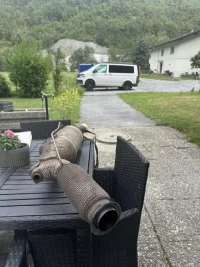
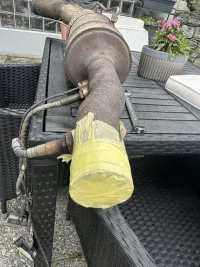
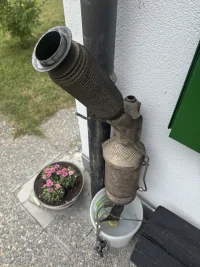
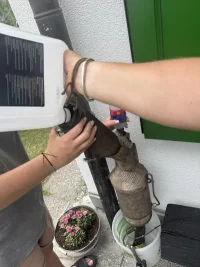
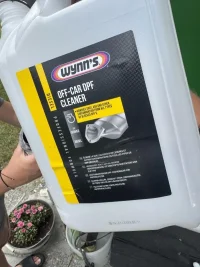
After chatting with a few mates, I got mixed advice..... some said to leave the sensors in, others reckoned it’s safer to remove them. In the end, I decided to take the risk and leave them in.
I packed the sensor side with bubble wrap and rubber, then sealed it up with masking tape. I poured in a full bottle of DPF cleaner and now I’m letting it sit for a while. I’ll give it a shake every now and then, and later this evening I’ll pour in some boiling water. I don’t have access to an air compressor where I am, so I’m going to try cleaning it out with the Karcher. Let’s see how it goes. Worst case, I need new sensors. Absolute worst case, a whole new DPF. But fingers crossed -> best case, this gets me another 50,000 km!


Good luck. From the pictures it looks lovely where you are!So the DPF came out today. *woooohoooo!
After chatting with a few mates, I got mixed advice..... some said to leave the sensors in, others reckoned it’s safer to remove them. In the end, I decided to take the risk and leave them in.
I packed the sensor side with bubble wrap and rubber, then sealed it up with masking tape. I poured in a full bottle of DPF cleaner and now I’m letting it sit for a while. I’ll give it a shake every now and then, and later this evening I’ll pour in some boiling water. I don’t have access to an air compressor where I am, so I’m going to try cleaning it out with the Karcher. Let’s see how it goes. Worst case, I need new sensors. Absolute worst case, a whole new DPF. But fingers crossed -> best case, this gets me another 50,000 km!
View attachment 295864
View attachment 295865
View attachment 295866
View attachment 295867
View attachment 295868
Just like Cog Head described in his earlier posts, I ran into the exact same set of obstacles. The most frustrating part by far was the H5 bolt on the V-band clamp at the top of the DPF, just after the catalytic converter. It faces upwards -- a truly inspired bit of VW engineering that required body contortions worthy of a Kamasutra diagram. Getting it loose was a real challenge, but once it cracked free, the rest was straightforward.@T6NOMAD How challenging was it to remove the DPF? I'm also planning to do this in the coming weeks, but it sounds like a nightmare job!
Next, I loosened the two bolts supporting the prop shaft and rested it on a stand to avoid putting any tension on it. That gave me enough clearance to undo the heat shield clamps. After about five minutes of careful wiggling, I was able to slide it out, which gave me access to the sensor connectors mounted on the body.
The final step was pulling out the angle grinder to cut off the dual clamp, since the bolts were completely seized. Once that was off, everything else came apart with no issues.
Similar threads
- Replies
- 2
- Views
- 435

- Replies
- 10
- Views
- 853

- Replies
- 73
- Views
- 4K
- Replies
- 5
- Views
- 308
- Replies
- 7
- Views
- 842