

You are using an out of date browser. It may not display this or other websites correctly.
You should upgrade or use an alternative browser.
You should upgrade or use an alternative browser.
T6.1 diesel heater install
- Thread starter Cooper
- Start date
-
- Tags
- night heater t6.1

Thank you. Yes I have that - my question I guess was about if anyone had got to the bottom of why the different types of tank unit are fitted. I checked the wiring diagrams and I couldn’t see a mention of 2 connectors, only one connector like mine.All in the manual for a proper heater (Webasto)
View attachment 287700
Originally I thought I could swap my tank pump/sender unit for the one that is often advertised for T6.1 which has the extra nipple. But I realise I can’t do that as the wiring doesn’t even match.
So it was partly out of curiosity and it looks like I’ll end up drilling the hold etc.
Many thanks for taking the time!
Well done, Stuiemc, on your installation! You've been through a winter since. Hope it worked out well for you.Finished up my Eberspacher install the other day.
Had a minor issue on initial start up which was due to having low fuel and the drivers side jacked up. Tried 4 times trying to get the system to prime before I realised it’s probably not picking fuel up from the tank. Put it back down on the ground and tried several more times which resulted in locking out the heaters ECU. I had to go to a Eberspacher dealer with diagnostics to unlock it. Lesson learnt make sure you suck the fuel up to the pump before attempting the initial start up. Positive thing was they checked the install and were happy with it so good to have peace of mind. I did have to de-pin the plug for the exhaust valve and re-route the cable through a different hole due to the location I put the heater. The cables around the exhaust have got a kevlar wrap on now just forgot to take a picture once it arrived.
I choose to fit mine under the drivers seat, the space was there and I wanted to leave the option of fitting CAK underslung water tanks and gas tank infront of the spare wheel. Probably have to adjust some pipes but I’ll deal with that when the time comes.
View attachment 241683
View attachment 241684
View attachment 241685View attachment 241686View attachment 241687View attachment 241688View attachment 241689View attachment 241690View attachment 241691View attachment 241692View attachment 241693View attachment 241694View attachment 241695View attachment 241696View attachment 241697View attachment 241698View attachment 241699
So pleased I came across your input to this thread because I've been wrestling with something very similar. Planning to install a diesel feed for a Truma water/ air heater. Initially thought I'd need to drop the tank (and bought the sender removal tool and new seal and tank bolts), then discovered a Webasto I didn't know was fitted (!) and that I could use its existing diesel feed (but didn't like the look of all that clutter forward of the AdBlue tanks), then got all excited on discovering the same pipe that you found to the rear of the tank.
How odd that it sticks out invitingly at the back there!
At that point I hadn't picked up on the relevance of this thread, so started another:
Hi All
I’m converting my recently acquired LWB T6 to a camper and am currently spending a lot of time underneath it, wondering how so many tools can possibly end up so far out of reach…
Next job is to connect to the diesel supply, ready for the Truma D4E heater, and I seem to have discovered the perfect connection location: just behind the tank. Only trouble is, I’m not aware of anyone else having done it this way. Is that because I’ve overlooked an obvious/ major drawback?
I don’t think I need to drop the tank because I’ve recently discovered a Webasto heater lurking under the...
I’m converting my recently acquired LWB T6 to a camper and am currently spending a lot of time underneath it, wondering how so many tools can possibly end up so far out of reach…
Next job is to connect to the diesel supply, ready for the Truma D4E heater, and I seem to have discovered the perfect connection location: just behind the tank. Only trouble is, I’m not aware of anyone else having done it this way. Is that because I’ve overlooked an obvious/ major drawback?
I don’t think I need to drop the tank because I’ve recently discovered a Webasto heater lurking under the...
- CheqSkip
- diesel heater diesel pipe connection metering pump truma webasto
- Replies: 0
- Forum: General VW T6 Chat
Anyway, almost set to follow your lead now, having tracked down the same quick-release T you went for, on eBay. Have also ordered, from Butler Technic, a Webasto 7.5 to 4.5 reducer hose elbow, as the barbed spigot on the T is larger than the 5mm external diameter fuel pipe I'll need to connect to it. I'm guessing you'll have gone for something similar (think oldiebut goodie helpfully pointed out that this would be necessary, on this thread or a similar one...I've lost track).
Just a small warning on a minor point: most of the hose clamps you've used are of the type I've fount to be pretty reliable, but a couple are the old-style jubilee clips that I think don't fit too snugly on smaller hoses and can allow leaks to develop. Hopefully yours will be fine, but just something to check next time you're under there, maybe.
Thanks again for your useful input, and the handy pics!
Thank you mate! Glad you managed to get sorted and found the info useful. Yeah mines been spot on over the winter hasn’t missed a beat, real game changer in the winter. It is strange how some transporters have randomly been fitted with aux heaters, not complaining though!Well done, Stuiemc, on your installation! You've been through a winter since. Hope it worked out well for you.
So pleased I came across your input to this thread because I've been wrestling with something very similar. Planning to install a diesel feed for a Truma water/ air heater. Initially thought I'd need to drop the tank (and bought the sender removal tool and new seal and tank bolts), then discovered a Webasto I didn't know was fitted (!) and that I could use its existing diesel feed (but didn't like the look of all that clutter forward of the AdBlue tanks), then got all excited on discovering the same pipe that you found to the rear of the tank.
How odd that it sticks out invitingly at the back there!
At that point I hadn't picked up on the relevance of this thread, so started another:
Hi All
I’m converting my recently acquired LWB T6 to a camper and am currently spending a lot of time underneath it, wondering how so many tools can possibly end up so far out of reach…
Next job is to connect to the diesel supply, ready for the Truma D4E heater, and I seem to have discovered the perfect connection location: just behind the tank. Only trouble is, I’m not aware of anyone else having done it this way. Is that because I’ve overlooked an obvious/ major drawback?
I don’t think I need to drop the tank because I’ve recently discovered a Webasto heater lurking under the...
- CheqSkip
- diesel heater diesel pipe connection metering pump truma webasto
- Replies: 0
- Forum: General VW T6 Chat
Anyway, almost set to follow your lead now, having tracked down the same quick-release T you went for, on eBay. Have also ordered, from Butler Technic, a Webasto 7.5 to 4.5 reducer hose elbow, as the barbed spigot on the T is larger than the 5mm external diameter fuel pipe I'll need to connect to it. I'm guessing you'll have gone for something similar (think oldiebut goodie helpfully pointed out that this would be necessary, on this thread or a similar one...I've lost track).
Just a small warning on a minor point: most of the hose clamps you've used are of the type I've fount to be pretty reliable, but a couple are the old-style jubilee clips that I think don't fit too snugly on smaller hoses and can allow leaks to develop. Hopefully yours will be fine, but just something to check next time you're under there, maybe.
Thanks again for your useful input, and the handy pics!
I’m only here reading this thread in preparation to install a heater in our T6.1 van so I know nothing more than I’ve read here, but it seems to me that the parts drawing shown in this earlier post mentions that the different sender was used as of 19-10-2020. So that would explain why some T6 vans had the extra nipple, although it doesn’t explain why some T6.1 vans did not have the extra nipple (assuming I kept track of the conversations.).Thank you. Yes I have that - my question I guess was about if anyone had got to the bottom of why the different types of tank unit are fitted. I checked the wiring diagrams and I couldn’t see a mention of 2 connectors, only one connector like mine.
Originally I thought I could swap my tank pump/sender unit for the one that is often advertised for T6.1 which has the extra nipple. But I realise I can’t do that as the wiring doesn’t even match.
So it was partly out of curiosity and it looks like I’ll end up drilling the hold etc.
Many thanks for taking the time!
Post in thread 'T6.1 diesel heater install'
T6.1 diesel heater install
Anyway, that’s just my 2c worth, as I try to decide where to install our heater, when and if we get one.
I’m struggling to work out how to install a heater in our van.
We have water tanks under the van along the right side where the factory heaters are installed and all the space under both front seats is filled by a pair of 300AHr batteries.
We have a hot water heater and air compressor taking up the next common spaces under the sides of the back seat/bed.
I think I could squeeze the heater under the van in the back left corner, but then I can’t work out how to get the air pipes back into the van. We have a Reimo rear seat with sliding tracks along the length of the floor, so it’s not a simple matter to drill a hole any old place.
I’m going to do some exploring to see if i can get a decent sized air hose up the C Pillar or the hole in front of the rear wheel. That’s probably not going to work because I’m about to install another water tank behind the fuel tank! I’ve made it hard for myself!
I’ve also considered a portable heater that can sit outside - that has the advantage of being able to leave it at home for most of the year in Australia, but it also still has the same problem of getting a big air pipe into the van without having a door open.
I came here tonight hoping to find someone had solve this challenge already…
We have water tanks under the van along the right side where the factory heaters are installed and all the space under both front seats is filled by a pair of 300AHr batteries.
We have a hot water heater and air compressor taking up the next common spaces under the sides of the back seat/bed.
I think I could squeeze the heater under the van in the back left corner, but then I can’t work out how to get the air pipes back into the van. We have a Reimo rear seat with sliding tracks along the length of the floor, so it’s not a simple matter to drill a hole any old place.
I’m going to do some exploring to see if i can get a decent sized air hose up the C Pillar or the hole in front of the rear wheel. That’s probably not going to work because I’m about to install another water tank behind the fuel tank! I’ve made it hard for myself!
I’ve also considered a portable heater that can sit outside - that has the advantage of being able to leave it at home for most of the year in Australia, but it also still has the same problem of getting a big air pipe into the van without having a door open.
I came here tonight hoping to find someone had solve this challenge already…

I think that you are pretty well snookered there! The only way that makes any sense is to re-locate the battery from under the driver's seat as that would be less involved tucking it into a space and requiring less/smaller holes for wiring. Of course it will involve more expense!
Thanks @oldiebut goodie I’m glad I haven’t missed an easy option and you can see how I’ve built myself into a corner.I think that you are pretty well snookered there! The only way that makes any sense is to re-locate the battery from under the driver's seat as that would be less involved tucking it into a space and requiring less/smaller holes for wiring. Of course it will involve more expense!

If you knew the pain and suffering I’ve been through to build those custom 306AHr batteries that totally fill the space under the seats, you wouldn’t have said that.

I’m pretty sure these batteries are now too big for any of the cavities under the floor, but of course I could make them a different shape.
I only have these batteries because the original Renogy batteries died and by the time I’d managed to get these batteries built I was really wishing we’d stuck the batteries somewhere else, but if I was starting again I’d go 24 or 48V so let’s not open that can of worms. I wouldn’t want to move just one battery because the cables are already stupidly big at 95mm2. Balancing the loads with a longer cable would just make it worse.
Our van is all my work except for the Reimo seat-bed and roof, and the original electrical install (that I’ve largely had to fix up.)
Next time I’ll order our van with the factory heater, tow bar and LED headlights! We have barn doors on the back so that meant they wouldn’t let us have factory LED headlights when we ordered Ginger.


Presumably my flappy paddle steering wheel won’t fit the new model so I’ll have to go through the pain of finding the correct wheel again!.

I spend a lot of time thinking how I’d like to do it differently next time.

 Except that includes wanting space inside for our MTBs so next time might be a 4WD Sprinter $$$.
**There will be NO next time!!!!**


Having slept on it, I’m seriously thinking that a portable heater is worth trying first. For one thing they’re cheaper to buy (I’m not so fussed about having a good brand if it’s not built-in) and then we can experiment with where the air needs to be directed (not that we have a lot of options in this tiny space.)
Of course winter is over now so I have to wait until at least next May before I can test any heating options. and we could be in Europe next winter… Good thing I haven’t bought an expensive built-in heater kit in advance!
Thanks for the counselling session.
I just realised that this random switching of the fuel delivery module is just like the change to the steering wheel button wiring plug that caught me out when I got our flappy paddle steering wheel. This petty change of a minor part has caught out a lot of people. It’s almost impossible to work out the part numbering of the MFSWs and button pads to know what plug is in your wheel without opening it up and looking!!I’m only here reading this thread in preparation to install a heater in our T6.1 van so I know nothing more than I’ve read here, but it seems to me that the parts drawing shown in this earlier post mentions that the different sender was used as of 19-10-2020. So that would explain why some T6 vans had the extra nipple, although it doesn’t explain why some T6.1 vans did not have the extra nipple (assuming I kept track of the conversations.).
Post in thread 'T6.1 diesel heater install'
T6.1 diesel heater install
Anyway, that’s just my 2c worth, as I try to decide where to install our heater, when and if we get one.
Thanks Volkswagen.
Odd about the led headlights - I specified led with barn doors when I had mine built with no problem in 2018.Next time I’ll order our van with the factory heater, tow bar and LED headlights! We have barn doors on the back so that meant they wouldn’t let us have factory LED headlights when we ordered Ginger.
Grrrrr!Odd about the led headlights - I specified led with barn doors when I had mine built with no problem in 2018.
It was not permitted when we ordered in early 2021 but it was available again about the time they delivered ours in early 2022.
We also got no spare wheel because we spec’d the 3200 GVM.
I shouldn’t think about this stuff. It makes me SO angry!
The nipple was there on my T6.1. Mid 2023 build 150hp DSG fwd panel van with optioned 80l tank.I had been wondering if the extra nipple unit is fitted to 80L tanks. Which perhaps get fitted to vehicles with factory heater or high power engines?

I think the changeover to the units with the nipple was sometime around mid 2021.The nipple was there on my T6.1. Mid 2023 build 150hp DSG fwd panel van with optioned 80l tank.
Could you get a duct behind the rear wheel? There is a void down there that might work, though I think you would have to go in via the sill.I’m struggling to work out how to install a heater in our van.
We have water tanks under the van along the right side where the factory heaters are installed and all the space under both front seats is filled by a pair of 300AHr batteries.
We have a hot water heater and air compressor taking up the next common spaces under the sides of the back seat/bed.
I think I could squeeze the heater under the van in the back left corner, but then I can’t work out how to get the air pipes back into the van. We have a Reimo rear seat with sliding tracks along the length of the floor, so it’s not a simple matter to drill a hole any old place.
I’m going to do some exploring to see if i can get a decent sized air hose up the C Pillar or the hole in front of the rear wheel. That’s probably not going to work because I’m about to install another water tank behind the fuel tank! I’ve made it hard for myself!
I’ve also considered a portable heater that can sit outside - that has the advantage of being able to leave it at home for most of the year in Australia, but it also still has the same problem of getting a big air pipe into the van without having a door open.
I came here tonight hoping to find someone had solve this puzzle
Alternatively, sacrifice the step water tank and put the heater there. You could put a corner water tank back left, as you only need a skinny pipe for water

Hey all! Dropped the tank slightly. Nipple is being used 
A little confused because from the images i see here there should only be two diesel connections plus a free nipple.
The nipple that is free has a tube running to the front? Is this normal? What is it for? I've added a photograph.
Its a 2021 lwb t6.1. Bought at 15k miles.
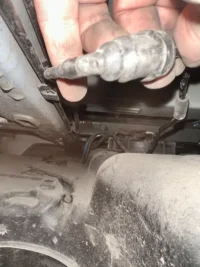
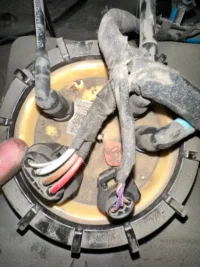
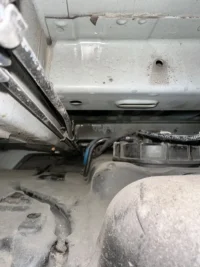
A little confused because from the images i see here there should only be two diesel connections plus a free nipple.
The nipple that is free has a tube running to the front? Is this normal? What is it for? I've added a photograph.
Its a 2021 lwb t6.1. Bought at 15k miles.
Errr....... you already have a heater installed!
Check inside the driver's door for a sticker - A-pillar usually.
Check inside the driver's door for a sticker - A-pillar usually.
Similar threads

- Replies
- 3
- Views
- 691


- Replies
- 1
- Views
- 801

- Replies
- 23
- Views
- 1K