Jleadbeater
New Member
thanks EAN, this already sounds more complicated than I was envisioning. C GPT tells me this for the panel:Do you mean to operate the portable panel in conjunction with your existing or instead of?
The important specs that you need to allow for are the Voc and Isc of your panels.
The Voc is the open circuit voltage and the Isc is the short circuit current.
Each has to be within your controllers spec.
Now if you are operating one or the other then just ensure the open circuit Voltage of your portable panel is less than the input voltage of your controller and the short circuit current of the panel is less than the max output current of your controller. If so then you can connect your portable panel instead of your existing.
It gets slightly more complicated if you want to connect both panels together.
If you do then the panels need to have pretty similar specifications or the power that can be produced will be severely compromised and not worth it: You won't get the sum of the wattage from each panel.
If the Voc specified for both panels is pretty much identical and within the controllers range then you could connect them in parallel as long as your controller can take the combined current total of the two panels Isc. Your cabling will also need to be rated for the combined current.
You could also connect them in series if the sum of each panels Voc doesn't exceed the input voltage limit of your controller. Your cabling will need to be rated to take the higher voltage.
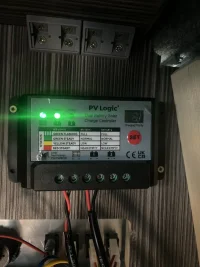
If you provide your controller and panel specs and whether you want to run them together or separately then I can take a look to see what is possible.
- Voc (Open Circuit Voltage): 28.5V
- Isc (Short Circuit Current): Anker doesn’t explicitly list it on the product page, but based on the panel’s operating specs:
- Vmp (Operating Voltage): 24.5V
- Imp (Operating Current): 4.1A
- The Isc is typically around 4.3–4.5A for this class of panel.
Last edited: