Hillside Birchover

I’ve just fitted a 200W solar panel to my 2023 Birchover. The ‘electrical cupboard’ in mine (pictured below) was only 35mm deep so there was no space in which to install a Victron SmartSolar 100/30 solar controller. With your installation, it looks like they’ve found a solar controller that will fit in that space (or they’ve increased the space to accommodate it). It worries me that there is limited airspace with no ventilation - a recipe for overheating it seems. In the case of other Hillside factory installations, it seems the solar controllers have been fitted in the wardrobe itself which seems plain daft to me.

In my case, I decided to fit the controller in the wheel arch void underneath the rear cubby (second picture) where there is much more space, some airflow and cooling. I found it was easy to feed the +ve output cable from the controller back to the electrical cupboard to connect to the +ve input on the 12V fuse block (not isolated when the engine is running) and the -ve cable back to the body earth stud that is just in front of the offside rear lamp unit.

In spite of the nasty rat’s nest of factory wiring, the absence of manufacturer documentation and the lack of cover to the rear of the 230V sockets, I found it a fairly straightforward to fit solar. I fitted a 20A fuse between the controller and the fuse panel input (shown before connection in the last picture) and a 2-pole isolator in the solar feed (between the consumer unit and heater switch in last picture).

View attachment 325925

View attachment 325926

View attachment 325928
View attachment 325927
I like that idea, seems much cooler and ventilated down there.

Isolator - presume this is from the solar panel to the MPPT, and is this necessary or your preference?

The +V connector out of the MPPT, this goes to the fuse block, on mine it goes to the 12v socket, Presume its ok to leave that as is provided I put a 20 amp inline fuse is before the socket?
 
I like that idea, seems much cooler and ventilated down there.

Isolator - presume this is from the solar panel to the MPPT, and is this necessary or your preference?

The +V connector out of the MPPT, this goes to the fuse block, on mine it goes to the 12v socket, Presume its ok to leave that as is provided I put a 20 amp inline fuse is before the socket?
I was reluctant to use an isolator as it introduces a break into the solar feed and therefore potential additional resistance. However, on balance I felt that having the ability to switch out the solar panel from the circuit from a conveniently accessible location within the habitation area was a good idea should it ever be necessary to disconnect the solar panel from the circuit. The only issue was where to locate this.

As you see it was lucky it fitted snugly between the consumer unit and the water heater switch. A word of warning though if you choose to locate an isolator in this position. Drilling a hole through the panel on which it is mounted for the solar cabling has to be done with great care as it is easy to drill into the loom behind. I slipped a metal pallet knife behind the loom to ensure the drill couldn’t damage the loom when it broke through.

Having a suitably rated fuse in the +ve line is just good practice, provided the actual fusible link is of good quality, as it will protect the cable. Other Birchover owners on this forum have used the fuse panel feed as I have done, largely because making the connection just involves sliding a spade connector onto the existing piggyback connector. I also believe that this connection is not switched by the engine run relay in the rear electrical compartment so remains able to feed current to the auxiliary battery when the vehicle is in motion. Hillside’s documentation in this regard is of no help and doesn’t even show a 12V socket in the rear panel in the outdated electrical schematic they supplied with the van.

As @EAN has done, I clipped the loose Hillside cabling to the panel with P clips before I fixed the cover panel back and would suggest you consider doing this to eliminate any cable movement.
 
Last edited:
I was reluctant to use an isolator as it introduces a break into the solar feed and therefore potential additional resistance. However, on balance I felt that having the ability to switch out the solar panel from the circuit from a conveniently accessible location within the habitation area was a good idea should it ever be necessary to disconnect the solar panel from the circuit. The only issue was where to locate this.

As you see it was lucky it fitted snugly between the consumer unit and the water heater switch. A word of warning though if you choose to locate an isolator in this position. Drilling through the panel on which it is mounted has to be done with great care as it is easy to drill into the loom behind. I slipped a metal pallet knife behind the loom to ensure the drill couldn’t damage the loom when it broke through.

Having a suitably rated fuse in the +ve line is just good practice, provided the actual fusible link is of good quality, as it will protect the cable. Other Birchover owners on this forum have used the fuse panel feed as I have done, largely because making the connection just involves sliding a spade connector onto the existing piggyback connector. I also believe that this connection is not switched by the engine run relay in the rear electrical compartment so remains able to feed current to the auxiliary battery when the vehicle is in motion. Hillside’s documentation in this regard is of no help and doesn’t even show a 12V socket in the rear panel.

As @EAN has done, I clipped the loose Hillside cabling to the panel with P clips before I fixed the cover panel back and would suggest you consider doing this to eliminate any cable movement.
Sound advice, thank you all. I probably won’t be starting this for a few months yet as I want to assess the efficiency of the solar panel/controller that is already fitted. If it’s ok it may last this year.
 
They certainly are!! If it's the way you've been taught, you know no different I suppose.
I personally wouldn't sign it off and the wiring is the most disappointing bit of what is otherwise quite a quality conversion IMHO.
I completely agree. This was borne out by comments from several Hillside owners at this weekend’s Hillside Owners Group gathering in Birchover, Matlock. And it extends to their bigger Crafter/TGE based campers. Electrics certainly don’t seem to be their strong point.
 
I completely agree. This was borne out by comments from several Hillside owners at this weekend’s Hillside Owners Group gathering in Birchover, Matlock. And it extends to their bigger Crafter/TGE based campers. Electrics certainly don’t seem to be their strong point.
That may have set the world record for the biggest gathering of multimeters?
 
Hi, I have a 22 plate Birchover and was going to connect a SolarGo2 setup when we are parked up. Apparently the solar panels have a controller that connects directly to the battery (simply clips on directly to the poles). I've seen this connected to other vans with more basic wiring and seems to work well but was wondering if anyone had connected to a Birchover leisure battery. I won't ever have the engine running with this setup. Just seems too simple....any comments gratefully received.
 
Hi, I have a 22 plate Birchover and was going to connect a SolarGo2 setup when we are parked up. Apparently the solar panels have a controller that connects directly to the battery (simply clips on directly to the poles). I've seen this connected to other vans with more basic wiring and seems to work well but was wondering if anyone had connected to a Birchover leisure battery. I won't ever have the engine running with this setup. Just seems too simple....any comments gratefully received.
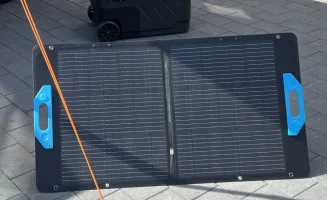
The Solar2Go 110W fold up panel with the integral controller could be set up on the dashboard and plugged into either of the two 12V sockets in the cab to charge the auxiliary/leisure battery. As the maximum output current from this panel is around 6 Amps it should be safe enough connected this way to keep the auxiliary battery charged. However, if the refrigerator is running, the lights are on or the water pump is used, the panel will struggle to keep pace with the demand.

 
  • Like
Reactions: EAN
The Solar2Go 110W fold up panel with the integral controller could be set up on the dashboard and plugged into either of the two 12V sockets in the cab to charge the auxiliary/leisure battery. As the maximum output current from this panel is around 6 Amps it should be safe enough connected this way to keep the auxiliary battery charged. However, if the refrigerator is running, the lights are on or the water pump is used, the panel will struggle to keep pace with the demand.

Thanks for that, I have one 12v socket and 2 usbs on the dash and one 12v socket in the rear and I'd always assumed these ran off the main battery rather than the leisure battery - do they all run off the leisure battery ? Going in via the 12v socket would be a much easier option.
 
Thanks for that, I have one 12v socket and 2 usbs on the dash and one 12v socket in the rear and I'd always assumed these ran off the main battery rather than the leisure battery - do they all run off the leisure battery ? Going in via the 12v socket would be a much easier option.
On T6.1s fitted with a factory-fitted auxiliary battery, the 12V cab sockets are usually powered from it. If your Birchover is the Classic model - which is based on a Highline spec - there should be a second 12V socket adjacent to the gearshift BTW.
 
On T6.1s fitted with a factory-fitted auxiliary battery, the 12V cab sockets are usually powered from it. If your Birchover is the Classic model - which is based on a Highline spec - there should be a second 12V socket adjacent to the gearshift BTW.
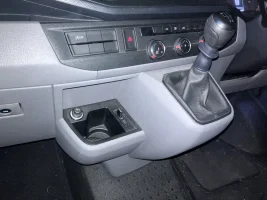
I have the classic (22 plate) however it only seems to have one 12v cab socket in the drinks holder area to the left of the gearstick together with 2 usb ports. Should there be another up front and if so where ? picture of my dash attachedtransporterdash.webp
 
I have the classic (22 plate) however it only seems to have one 12v cab socket in the drinks holder area to the left of the gearstick together with 2 usb ports. Should there be another up front and if so where ? picture of my dash attached
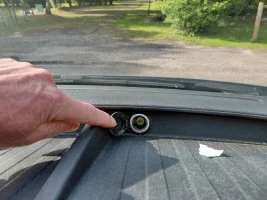
On the dash top in front of the driver. If you don’t, I think you have the Birchover S model which is based on a Startline spec Transporter T6.1 which doesn’t have the dash top socket.

IMG_2869.webp
 
On the dash top in front of the driver. If you don’t, I think you have the Birchover S model which is based on a Startline spec Transporter T6.1 which doesn’t have the dash top socket.

View attachment 326097
Its the startline with just a blanking plate in that location. I presume the same still goes though and the front and rear 12v sockets run off the leisure battery. Oddly the rear 12v socket works when the engine is on, I thought all rear electrics except the fridge were isolated when the engine was running.
 
@MORK21 The 12V sockets are always powered.
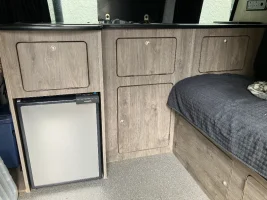
Do you have a barrel door in front of your fridge: That is the quickest tell as to whether you have a Birchover Classic, otherwise as @Captain Quick says you have a Birchover S.
I think it's possible to have a classic with Startline trim if it's in certain colours.
 
@MORK21 The 12V sockets are always powered.
Do you have a barrel door in front of your fridge: That is the quickest tell as to whether you have a Birchover Classic, otherwise as @Captain Quick says you have a Birchover S.
I think it's possible to have a classic with Startline trim if it's in certain colours.
No, we have a slide in fridge with no trim around it. The colour scheme is the inoffensive brown scheme (sadly). IMG_4082.webp
 
@MORK21 Yes that's an S. Hopefully it wasn't sold to you as a Classic.
Have seen the occasional on Autotrader mis advertised.
From memory the differences (apart from the base vehicle) are hot water tank, external shower, warming oven and the extra storage of the barrel door in front of the fridge.
TBH we never use the warming oven and use it as a "cupboard" to store extra food. External Shower also never been used. Hot water can be useful, but boiling a kettle isn't exactly difficult.
Hope you are enjoying it.
 
Its the startline with just a blanking plate in that location. I presume the same still goes though and the front and rear 12v sockets run off the leisure battery. Oddly the rear 12v socket works when the engine is on, I thought all rear electrics except the fridge were isolated when the engine was running.
You’ll be able to connect that solar panel with controller into the single cab socket to charge the auxiliary battery though.

Sadly, Hillside’s supplied electrical schematic doesn’t make it clear what the engine run operated relay that’s located in the rear ‘electrical cupboard’ actually controls. That said, when running the engine (or charging the starter battery) the habitation lights and water pump are switched off although the fridge and rear 12V socket are still powered up. It seems this is common practice amongst NCC approved caravan, motorhome and campervan builders. It appears to be designed this way to avoid RF emissions affecting the function of vehicle electronics and radio reception whilst the vehicle is being driven.
 
You’ll be able to connect that solar panel with controller into the single cab socket to charge the auxiliary battery though.

Sadly, Hillside’s supplied electrical schematic doesn’t make it clear what the engine run operated relay that’s located in the rear ‘electrical cupboard’ actually controls. That said, when running the engine (or charging the starter battery) the habitation lights and water pump are switched off although the fridge and rear 12V socket are still powered up. It seems this is common practice amongst NCC approved caravan, motorhome and campervan builders. It appears to be designed this way to avoid RF emissions affecting the function of vehicle electronics and radio reception whilst the vehicle is being driven.
That's great thanks very much for the info. I presume I can also connect the solar to the rear 12v socket as this might be more convenient in my setup.
 
Morning, I’m trying to sense check an idea with solar. I think in need to replace my existing solar panel but won’t know how efficient it is until I’ve ran it for a few trips. Now, as an additional bit of solar input, is there any reason I can’t wire my portable panel to the existing controller, I was going to on a temporary basis wire a couple of MC4s to the controller so I can just plug in my portable 100w panel when I’m away?

IMG_5946.webp
 
Morning, I’m trying to sense check an idea with solar. I think in need to replace my existing solar panel but won’t know how efficient it is until I’ve ran it for a few trips. Now, as an additional bit of solar input, is there any reason I can’t wire my portable panel to the existing controller, I was going to on a temporary basis wire a couple of MC4s to the controller so I can just plug in my portable 100w panel when I’m away?

View attachment 326399
Do you mean to operate the portable panel in conjunction with your existing or instead of?
The important specs that you need to allow for are the Voc and Isc of your panels.
The Voc is the open circuit voltage and the Isc is the short circuit current.
Each has to be within your controllers spec.
Now if you are operating one or the other then just ensure the open circuit Voltage of your portable panel is less than the input voltage of your controller and the short circuit current of the panel is less than the max output current of your controller. If so then you can connect your portable panel instead of your existing.
It gets slightly more complicated if you want to connect both panels together.
If you do then the panels need to have pretty similar specifications or the power that can be produced will be severely compromised and not worth it: You won't get the sum of the wattage from each panel.
If the Voc specified for both panels is pretty much identical and within the controllers range then you could connect them in parallel as long as your controller can take the combined current total of the two panels Isc. Your cabling will also need to be rated for the combined current.
You could also connect them in series if the sum of each panels Voc doesn't exceed the input voltage limit of your controller. Your cabling will need to be rated to take the higher voltage.
If you provide your controller and panel specs and whether you want to run them together or separately then I can take a look to see what is possible.
 
Back
Top