Hillside Birchover

Much more sophisticated than I, I just drilled a hole into wood panel behind drivers seat, and then spent AGES fishing wire from there through to MPPT in rear wardrobe. EFFORT:) well done
I spent more time than I should have poking around with one of those miniature cameras, trying to work it out. :)
As I was getting knowhere, I just decided to bite the bullet and take the fridge out.
I couldn’t believe how easily it came out and then how much access it gives.
Game changer for me.
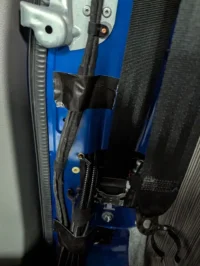
 
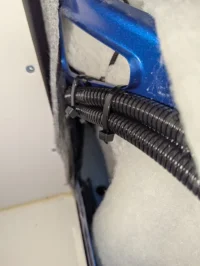
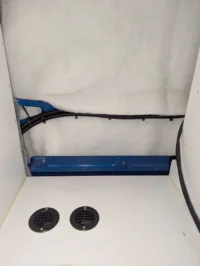
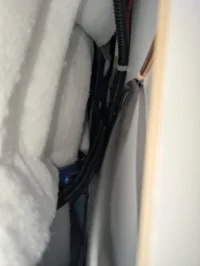
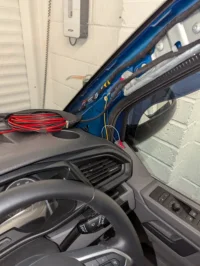
So I ended up feeding 3 off 13mm OD 10.1mm ID conduits through from the drivers seat base to the B-pillar and back to the rear cupboard along the route of the original 10mm OD Hillside conduit, together with an additional 13mm OD conduit just between the drivers seat base and B-pillar for wiring going up over the door and down the A-pillar.
Pics attached

PXL_20260127_120450053.webpPXL_20260120_114216572.webpPXL_20260120_114128586.webpPXL_20260120_114236972.webpPXL_20260128_142636666.webp
 
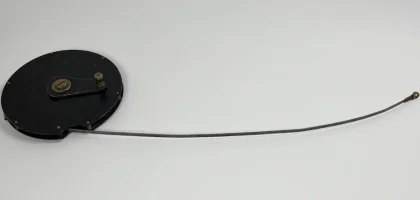
Nice work. When installing a rear view camera in my LWB Birchover, I managed to feed a camera cable from the top of the tailgate across into the upper void above the wardrobe and inside the pop-top frame to the top of the B-pillar, across the driver’s door to the A-pillar. I found that route very easy using my trusty BT steel tape puller (shown below) without the need to dismantle much or go behind the side unit.

IMG_2765.jpeg
 
Nice work. When installing a rear view camera in my LWB Birchover, I managed to feed a camera cable from the top of the tailgate across into the upper void above the wardrobe and inside the pop-top frame to the top of the B-pillar, across the driver’s door to the A-pillar. I found that route very easy using my trusty BT steel tape puller (shown below) without the need to dismantle
I need to invest in a steel tape puller; my nylon one is great for getting around bends along conduit but bends too much to get any distance unconstrained and goes everywhere except where you want it!
My next 2 challenges are getting from the bottom of the A-pillar out to the engine bay and getting from the rear cupboard to below the rear bumper. I’ve found posts showing grommets, but have still to investigate in person.
 
I need to invest in a steel tape puller; my nylon one is great for getting around bends along conduit but bends too much to get any distance unconstrained and goes everywhere except where you want it!
My next 2 challenges are getting from the bottom of the A-pillar out to the engine bay and getting from the rear cupboard to below the rear bumper. I’ve found posts showing grommets, but have still to investigate in person.
These Rabone steel tape threading tools come up from time to time on eBay and at car boot sales. I’ve had my metal mouse since the 1970s. They’re worth their weight in gold.
 
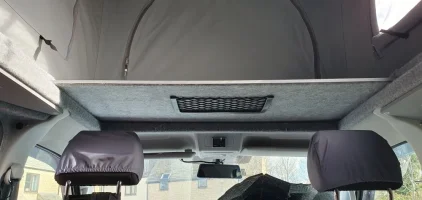
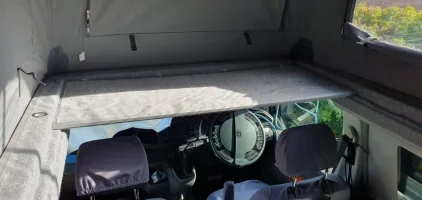
Another project finished on our LWB Birchover. The aim of this one was to provide some additional horizontal storage space over the cab area at night for bags, clothes, etc. in order to keep the front seats and cab floor clear.

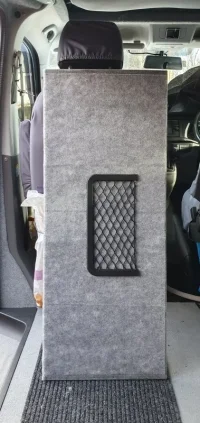
For the shelf, I used a sheet of 9mm WBP plywood cut to size (1095mm x 430mm), covered by grey 4-way stretch carpet and edged at the front with ‘L’ section aluminium channel (10mm x 20mm) and strips of 10mm ‘U’ section clear plastic edging at the sides.

I added a pocket to the underside so we can keep things like key cards, keys or torches handy. The shelf is fitted in place when the pop-top (an SCA 192) is raised and stored behind the rear seat when the roof is closed. I’ve tried it out with a 17kg packed awning so it looks like it will be good for up to 15kg.

IMG_2782.jpeg

IMG_2783.jpeg

IMG_2785.jpeg
 
First time posting here, I picked up a 2024 Birchover a couple of weeks ago and on the whole I’m well chuffed, I had the fit a lithium battery and Victron Orion DC>DC, works a treat. Just trying to learn the van and followed most the posts on here, question I’ve got is does the solar to leisure battery from the controller look right on this pic, looks like it’s connected to the 12v socket?IMG_5934.webpIMG_5935.webp
 
It doesn't look like a Hillside setup, they use a different Dc-Dc converter.
yes, I was talking to Elliott there the sparky a few days ago and it definitely wasn’t them. I’m just trying to understand if what they have done is ok. It’s it efficient going that way, I know there’s charge getting to the battery.
 
yes, I was talking to Elliott there the sparky a few days ago and it definitely wasn’t them. I’m just trying to understand if what they have done is ok. It’s it efficient going that way, I know there’s charge getting to the battery.
It doesn't look like they have installed a fuse between the Dc-dc charger/converter. It is recommended because if it has a internal fault it needs to be protected as the battery can discharge a lot of energy into the fault. I suspect its routed via the 12 v socket fuse, and its rating may not be correct. I would get an electrician to give it a check over.
 
Last edited:
It doesn't look like they have installed a fuse between the Dc-dc charger/converter. It is recommended because if it has an internal fault it needs to be protected. I suspect its routed via the 12 v socket fuse, and its rating may not be correct. I would get an electrician to give it a check over.
So that’s a 20 amp fuse on that, would it be more efficient if I disconnected that and routed it direct to the battery with possibly an inline fuse or would it not matter?
 
So that’s a 20 amp fuse on that, would it be more efficient if I disconnected that and routed it direct to the battery with possibly an inline fuse or would it not matter?
They may have used the 12v socket as it is isolated when the engine is running. You don't want the vehicle alternator competing with the DC-DC charger to support the battery. I believe that Hillside connect their solar panels DC-DC charger to the EHU battery charger, i don't have one on my van so maybe one of the other forum members can clarify.
 
They may have used the 12v socket as it is isolated when the engine is running. You don't want the vehicle alternator competing with the DC-DC charger to support the battery. I believe that Hillside connect their solar panels DC-DC charger to the EHU battery charger, i don't have one on my van so maybe one of the other forum members can clarify.
Thanks Chris, sounds sensible. Above all it sounds like it’s ok?

In the long run I plan to upgrade to a MPPT controller so I guess my next question to anyone that can answer it is, can I just straight swap them out with the wiring that’s already there?
 
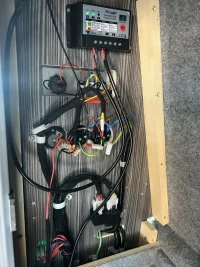
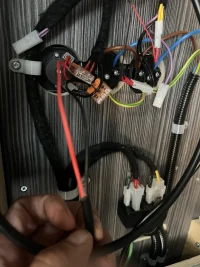
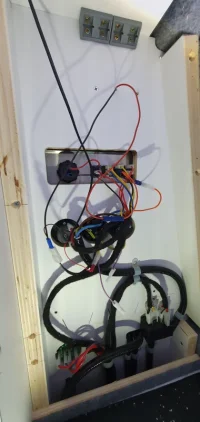
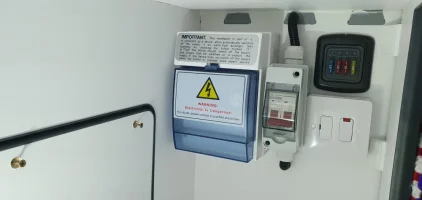
I’ve just fitted a 200W solar panel to my 2023 Birchover. The ‘electrical cupboard’ in mine (pictured below) was only 35mm deep so there was no space in which to install a Victron SmartSolar 100/30 solar controller. With your installation, it looks like they’ve found a solar controller that will fit in that space (or they’ve increased the space to accommodate it). It worries me that there is limited airspace with no ventilation - a recipe for overheating it seems. In the case of other Hillside factory installations, it seems the solar controllers have been fitted in the wardrobe itself which seems plain daft to me.

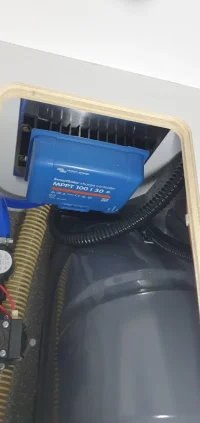
In my case, I decided to fit the controller in the wheel arch void underneath the rear cubby (second picture) where there is much more space, some airflow and cooling. I found it was easy to feed the +ve output cable from the controller back to the electrical cupboard to connect to the +ve input on the 12V fuse block (not isolated when the engine is running) and the -ve cable back to the body earth stud that is just in front of the offside rear lamp unit.

In spite of the nasty rat’s nest of factory wiring, the absence of manufacturer documentation and the lack of cover to the rear of the 230V sockets, I found it a fairly straightforward to fit solar. I fitted a 20A fuse between the controller and the fuse panel input (shown before connection in the last picture) and a 2-pole isolator in the solar feed (between the consumer unit and heater switch in last picture).

IMG_2631.webp

IMG_2840.webp

IMG_2866.webp
IMG_2841.webp
 
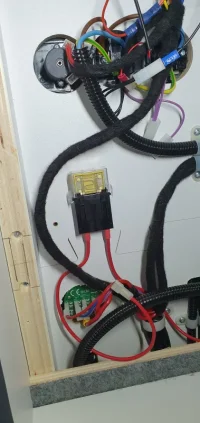
Hillside don't appreciate that crossing 12v electrical wiring right over just the basic insulation of individual mains wiring is a no no. I've done a temporary fix by p clipping the wiring to ensure they can never touch. There are actually standards that dictate creepage and clearance distances between wiring of different voltages. Probably not the only converter.
 
Hillside don't appreciate that crossing 12v electrical wiring right over just the basic insulation of individual mains wiring is a no no. I've done a temporary fix by p clipping the wiring to ensure they can never touch. There are actually standards that dictate creepage and clearance distances between wiring of different voltages. Probably not the only converter.
They are very consistent though, it takes a lot of effort to do it that badly every time. I’m guessing auto electricians are in high demand.
 
They are very consistent though, it takes a lot of effort to do it that badly every time. I’m guessing auto electricians are in high demand.
They certainly are!! If it's the way you've been taught, you know no different I suppose.
I personally wouldn't sign it off and the wiring is the most disappointing bit of what is otherwise quite a quality conversion IMHO.
 
Back
Top