Solar Sheds & Other Non-t6 Solar Projects - How We Done It -

Join up with my link... And we both get £50 free credit.


******

View attachment 321529
Already with them.
Read all their stuff today and couldn't see a way ahead with balcony solar to get SEG unless it's MCS installed.
Will just have to wait to see if it changes with the regs.
 
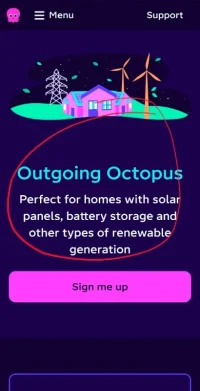
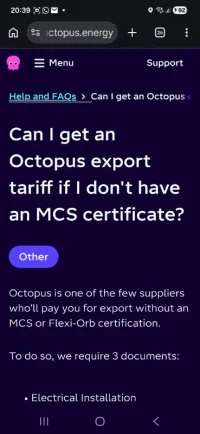
I singed up to this...


Screenshot_20260331_203249_Chrome.webp


.


You'll need to:

1
Be an Octopus Energy customer
If you're not with us yet, sign up and you'll join us on one of our standard tariffs initially. Then come back here once you've setup your account to apply for Outgoing Octopus.

2
Application Process (2 days)
Your application is processed by Octopus Energy and we apply to the DNO for an export MPAN (An MPAN is a unique number for the electricity meter in your property and when export is set up for the first time, a new MPAN must be requested from the Distribution Network Operator). Read more about the DNO here.

3
DNO creates your MPAN (1-4 weeks)
The DNO creates your export MPAN - this is the longest part of the application process and is out of our control as this depends on the resource available there (a bit like applying for a passport). Once the MPAN is created, Octopus can begin the enrolment onto Octopus' supply.

4
Your MPAN is enrolled (5 days)
Your new export MPAN is enrolled onto your Octopus account and you will receive an email asking you for a first meter reading.

5
We connect to your smart meter
Once connected to your meter we will start pulling your export consumption and you can begin enjoying your earnings without lifting a finger.
 
Yes, that's what I looked at, but going deeper in to it, it's impossible for balcony solar
 
can I apply to octopus energy export without a MCs certificate?


+3
Yes, you can apply for Octopus Energy export tariffs without an MCS certificate, but you must be an existing Octopus import customer and provide alternative documentation, such as an Electrical Installation Certificate and a Building Regulations Certificate. This, often called the "non-MCS" or "trial" route, requires DNO approval and requires you to self-certify that the installation meets industry standards.
Octopus Energy
Octopus Energy
+3

.****""

Key Requirements for Non-MCS Export:
Be a Customer: You must have your import electricity with Octopus.
Documentation: You need an Electrical Installation Certificate (EIC) for the AC side and a Building Regulations Certificate of Compliance.
DNO Approval: You must have written approval from your District Network Operator (DNO).
Smart Meter: A SMETS2 (or Secure SMETS1) meter is required.
Octopus Energy
Octopus Energy
+2
Important Considerations:
Limited Access: This is a, sometimes, limited, case-by-case, or trial scheme, rather than a guaranteed option.
Export Tariffs: You can access Octopus export tariffs (e.g., Fixed Outgoing) rather than the standard Smart Export Guarantee (SEG) which often requires MCS.
Application Process: The process can take several weeks while the DNO provides a new export MPAN number.
Octopus Energy
Octopus Energy
+3
Disclaimer: Regulations and company policies can change, so it is recommended to confirm directly with Octopus Energy at the time of application.
 
"Electrical Installation Certificate and a Building Regulations Certificate. "

That's the bit that stops it.

I'd have to get an electrician to wire it in and certify, so plug in doesn't work
 
Yes, that's what I looked at, but going deeper in to it, it's impossible for balcony solar
If the EcoFlow or DJI is G98 approved, (you need to submit the G,98 docs from them)

And you have the EICR done by the electricians to say your place is good. ( You need to send them a copy of the form)

You can even get them till wires it took a spur.

Or just get a small 3.6kw hybrid inverter wired in and add your panels to that,( and submit to get your export ). then once set up,

add in your additional EcoFlow kit.


........


Balcony solar will only ever be DIY, 800w whether plug in out not..... Export won't be a factor..... But if it's G98 type Approved. Then you can apply for export.... Provided it's installed to code and add per electric reg.

Ie: hardwired to spur, possibly need panels to be fixed with a DC isolator, possibly need a main connection isolator, possibly need the safety stickers on consumer unit with details of the micro generation and how to isolate...

All standard stuff needed for G98 installation for UK regs and dno sign off...... Ultimately to ensure it's safe and not going to back feed into the grid over voltage or not shut off correctly.
 
"Electrical Installation Certificate and a Building Regulations Certificate. "

That's the bit that stops it.

I'd have to get an electrician to wire it in and certify, so plug in doesn't work
Yes, the electrician can cut the plug off can fit you a spur

Then you need a EICR as well too say it's all safe.

Then with that you can apply.

If you want export then this is what you need to do.....

If not, then just accept the fact you can have 800w plug in solar with battery storage for DIY for free...... Or pay the cash for the next step up and get a fitted hybrid setup.

800w balcony solar= DIY

Export tarrifs= hardwired system + paperwork.

.
 
Once I get a battery from Ecoflow, with 4 mppt inputs, 2 more panels, I'm thinking I'd export pretty little. It'll mostly be going into the battery anyway.
Not going to worth the £250 Octopus fee plus £200 plus for an electrician....
 
Jeez, thanks lads....

With all this solar talk, and me looking at Octopus.

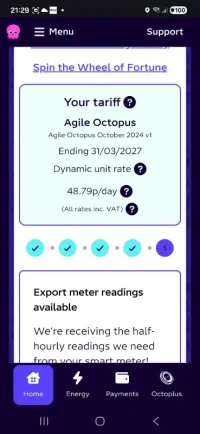
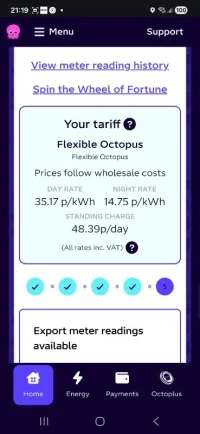
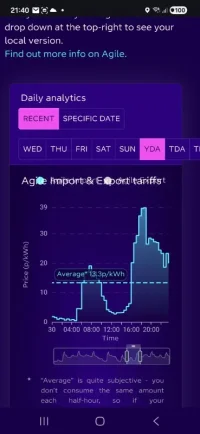
It seems my Octopus Agile Import tarrif had expired, and they move my onto standard economy 7 duel rate!!!!!

WTH.....

I've been watching the hourly price changes and playing battery charge lottery's.... But they have been charging me flat rate...


Any how. Now move beck onto the Agile traffic for another 12months ..

And keeping octopus export, ... Which is now dropping from 15p/kWh to 12p/kWh

....


Screenshot_20260331_212958_Chrome.jpgScreenshot_20260331_211949_Chrome.jpg
.

Screenshot_20260331_214014_Chrome.webp
 
@BoroBoy
@Sackmycook

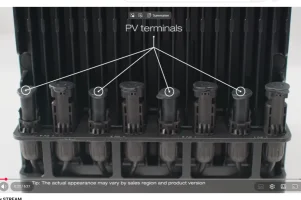
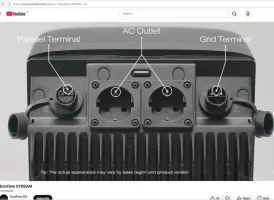
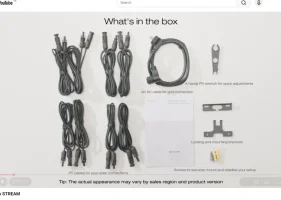
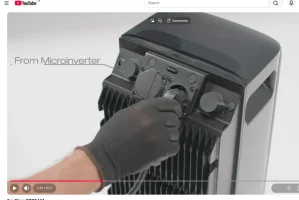
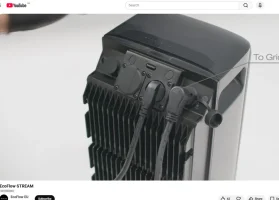
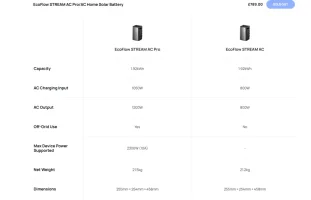
take a look at this for the EF STREAM product video.

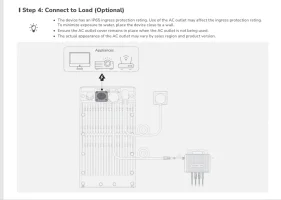
basically they are limited to the 800W into the house (export).

to get the 2300w - the actual device needs plugging INTO it, as a free standing device - not back feeding 2300 into house..

output is on the PRO version only

...

so plug in into the wall - 800w export max
plug solar into it - upto 2kw or whatever.
the plug your washing machin into it - 2300w max.

++++++++++


+++++++++


1775055216402.webp1775055252852.webp1775055288433.webp1775055429412.webp1775055452830.webp1775055522586.webp


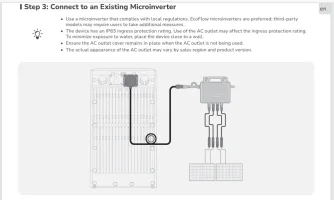
How many microinverters can the STREAM Series support? Can third-party microinverters be used?​

Due to regulatory limits, it is recommended to connect no more than one microinverter.

How does the system continue to supply power during a blackout?​

For safety and compliance reasons, the STREAM system will automatically detect a grid anomaly and stop feeding current into the grid during a power outage. You can then plug in your appliances directly into the AC outlets to use internal battery or solar power.

Can I install the STREAM Series by myself?​

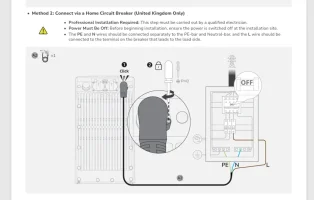
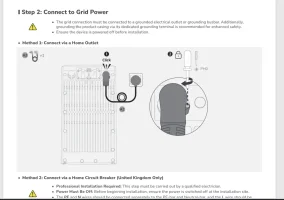
The system can be self-installed and maintained. However, in the UK, local regulations require the EcoFlow STREAM DIY Cable to be wired into the distribution board, which must be done by a certified installer or electrician.

Can I receive compensation for excess power fed into the grid by the STREAM system?​

Compensation policies may vary by region. You should contact your local grid operator using the contact information provided on your electricity bill to inquire.

Each MPPT of the STREAM Ultra/Pro has a maximum power of 500W. Can I connect solar panels with more than 500W to each port?​

Yes, as long as the solar panel meets the conditions of operating voltage (15-60V) and operating current (≤14A). This can optimize solar utilization during low sunlight conditions.


+++++


+++++


1775055880592.webp

1775055933542.webp


1775055946352.webp


1775055960505.webp
 
Yeah, I guess the important thing is that it’s short enough that even sensitive stuff like computers etc transition seamlessly.
I can confirm it's a seamless changeover, The first time I connected my system up, I had the whole house online, 3kW kettle running, and I switched off the incoming mains at the isolator switch next to the meter, not even a flicker, kettle boiled as normal, wifi stayed up, computer continued running, no change at all.
 
I can confirm it's a seamless changeover, The first time I connected my system up, I had the whole house online, 3kW kettle running, and I switched off the incoming mains at the isolator switch next to the meter, not even a flicker, kettle boiled as normal, wifi stayed up, computer continued running, no change at all.

That sounds great. Do you have any details of your system? I guess with whole house backup, given you have the full house supply passing through the inverter you need a manual changeover switch to bypass it just in case you have issues with the inverter? And how do you do the earthing on changeover, does it direct earth to a rod only on cutover, or do you have an earth rod used all the time?

Every time I research and try and find something with full local control I keep coming back to Victron. The only bit that's going to involve some faff is that I have a few options for dumping excess solar, including hot water immersion heating, EV charging, battery storage (when installed) and export and the correct one in any given scenario is going to involve a fair bit of logic that no system will handle natively - which is why I'll probably have to bring Home Assistant into it. The EV and immersion heater are controlled by MyEnergi kit currently so that won't natively talk to anything sadly.
 
See post #126 for an overview, It could be done cheaper by putting more panels on less MPPT charge controllers but I went for three identical strings to allow comparison and if one panel or controller goes faulty, I only lose a third of the production until I can get it fixed.
The biggest considerations are:1) How many panels can you get on your available space - and how high an output panel will fit. 2) How big a battery can you stump up for- mine is 16kWh, I'm already considering replacing it with a 32kWh version. 3) How much power you consume at any one time - this determines what size inverter you are going to need and could increase the cost significantly.
I have a 5KVA Multiplus II, cost around £620 at the moment, If that's not enough the new 6.5KVA is £610 at bmstechnologies at the moment. The 8kVA is another step up at £1100, the 10KVA is £1300.
If you're running it grid connected then you just need to consider what you would need to power if the grid goes off, otherwise the multiplus will supplement its production with a passthru from the grid if you stray over its output limit.
I have recalibrated my power usage to not put the kettle on at the same time as the microwave, or the induction hob to minimise grid usage, you may not be in a position to do that if you have multiple occupants who don't care what anyone else is using at any one time so either go for a bigger inverter or accept grid use at certain times.
All in (including scaffolding from an acquaintance) including new consumer unit, cabling, mounts etc I reckon I've done it for under £6K but I did a lot of the work myself with assistance from friends willing to crawl around a roof. Your results may vary. Battery was £1700, 12 470W panels £1145 delivered. MPPT's were £299 each. I sourced my wiring from a local supplier (superlec) who are way cheaper than most other places and went larger in pretty much every instance (10mm PV cable, 16mm mains cabling etc to minimise losses wherever I could)
I installed a 3M earth rod directly adjacent to my TNCS grid feed earth, this would only come into use should the grid cable be cut. Both are wired in parallel.

 
See post #126 for an overview, It could be done cheaper by putting more panels on less MPPT charge controllers but I went for three identical strings to allow comparison and if one panel or controller goes faulty, I only lose a third of the production until I can get it fixed.
The biggest considerations are:1) How many panels can you get on your available space - and how high an output panel will fit. 2) How big a battery can you stump up for- mine is 16kWh, I'm already considering replacing it with a 32kWh version. 3) How much power you consume at any one time - this determines what size inverter you are going to need and could increase the cost significantly.
I have a 5KVA Multiplus II, cost around £620 at the moment, If that's not enough the new 6.5KVA is £610 at bmstechnologies at the moment. The 8kVA is another step up at £1100, the 10KVA is £1300.
If you're running it grid connected then you just need to consider what you would need to power if the grid goes off, otherwise the multiplus will supplement its production with a passthru from the grid if you stray over its output limit.
I have recalibrated my power usage to not put the kettle on at the same time as the microwave, or the induction hob to minimise grid usage, you may not be in a position to do that if you have multiple occupants who don't care what anyone else is using at any one time so either go for a bigger inverter or accept grid use at certain times.
All in (including scaffolding from an acquaintance) including new consumer unit, cabling, mounts etc I reckon I've done it for under £6K but I did a lot of the work myself with assistance from friends willing to crawl around a roof. Your results may vary. Battery was £1700, 12 470W panels £1145 delivered. MPPT's were £299 each. I sourced my wiring from a local supplier (superlec) who are way cheaper than most other places and went larger in pretty much every instance (10mm PV cable, 16mm mains cabling etc to minimise losses wherever I could)
I installed a 3M earth rod directly adjacent to my TNCS grid feed earth, this would only come into use should the grid cable be cut. Both are wired in parallel.

That's great, thanks @Grim Reaper. We have five in our house, so anything that requires thought about what can be switched on with what isn't going to happen! With that in mind, I think we'd end up with the 8kW inverter - not because we'd need the 8kW exactly, but because it's the first one with a 100A as opposed to a 50A transfer switch which limits the passthrough in normal operation. (Not that I expect to be hitting 50A very often but we have an induction hob and a couple of ovens so it's probably at least possible).

Your ground arrangement makes sense. Did you install a changeover switch on the Multiplus output to in order to bypass it completely (and connect loads directly to grid) in case of an issue with the inverter?

Sounds like you got it done for a very keen price there. I could do various bits myself (i.e. the bits that don't require an electrician under the regs) but it's not clear that it would save me anything as if you go through an installer you're getting the expensive kit free of VAT, which hopefully basically pays for the labour more or less.
 
Back
Top