
P0101 00 [237] - Implausible Signal

Just want to say a big thanks for all your advice guys.
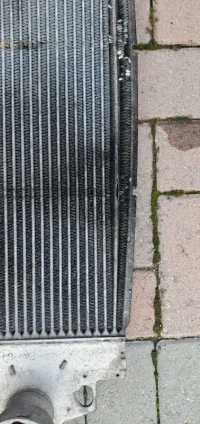
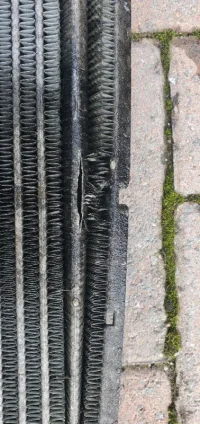
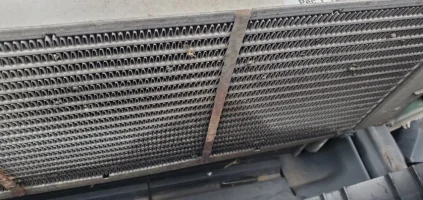
It was indeed the intercooler. Straps had come away from the back and a fairly large split developed in the bottom right side of the intercooler, at the rear, so couldn't see it without removing it.
It took some time taking the bumper off, due to some hidden push in type fixings and they were hard to get out.
Got there in the end though.
Thanks All.
20250915_152457.webp

20250915_152502.webp

20250914_111824.webp
 
Just want to say a big thanks for all your advice guys.
It was indeed the intercooler. Straps had come away from the back and a fairly large split developed in the bottom right side of the intercooler, at the rear, so couldn't see it without removing it.
It took some time taking the bumper off, due to some hidden push in type fixings and they were hard to get out.
Got there in the end though.
Thanks All.
View attachment 303340

View attachment 303341

View attachment 303342
Pleased you got it sorted @Shanz. How old is your van? I’m wondering if we are going to see a few more of these as they get older.
 
The last time I saw a heat exchanger expand and split like that there had been a ‘combustion event’ inside it.
Has anybody put any solvents / cleaners through the induction system?
 
I cleaned the MAF sensor 1st with archoil AR2810, and sprayed some into the air intake as directed on the can.
Could this have caused this?
Surely it wouldn't have popped the 4x support brackets off the back as well?
 
I cleaned the MAF sensor 1st with archoil AR2810, and sprayed some into the air intake as directed on the can.
Could this have caused this?
Surely it wouldn't have popped the 4x support brackets off the back as well?
I think it did, boost pressure alone wouldn’t have caused that much expansion IMO.
I can’t access the product MSDS which is slightly unusual. However as the technical document is talking about potential engine knock I’m fairly certain it has explosive properties.
It’s also stipulates engine temp, max’ RPM, very short spray duration and stopping in case of engine knock.
Most importantly it stipulates that it is introduced after the intercooler, is this how it was applied?

From the product technical sheet:

AIR INTAKE CLEANING: Ensure the engine is at full operating temperature. Loosen the hose between the intercooler and intake manifold. Insert the nozzle towards the direction of the air intake and with the engine idling, spray with a short 1-2 second burst. Allow the cleaner to work and the engine to consume the product. Do not rev the engine past 1500 rpm. Repeat these steps. Continue until cleaning is complete. Do not overspray or flood the intake with cleaning solution. In the event of diesel knock, reduce the amount of product or cease treatment. Reconnect hoses and Idle the engine for a further 5 minutes before test driving.
 
I think it did, boost pressure alone wouldn’t have caused that much expansion IMO.
I can’t access the product MSDS which is slightly unusual. However as the technical document is talking about potential engine knock I’m fairly certain it has explosive properties.
It’s also stipulates engine temp, max’ RPM, very short spray duration and stopping in case of engine knock.
Most importantly it stipulates that it is introduced after the intercooler, is this how it was applied?

From the product technical sheet:

AIR INTAKE CLEANING: Ensure the engine is at full operating temperature. Loosen the hose between the intercooler and intake manifold. Insert the nozzle towards the direction of the air intake and with the engine idling, spray with a short 1-2 second burst. Allow the cleaner to work and the engine to consume the product. Do not rev the engine past 1500 rpm. Repeat these steps. Continue until cleaning is complete. Do not overspray or flood the intake with cleaning solution. In the event of diesel knock, reduce the amount of product or cease treatment. Reconnect hoses and Idle the engine for a further 5 minutes before test driving.
Maybe I sprayed into the wrong intake. I applied it in short bursts into the intake located after the MAF sensor.
 
Maybe I sprayed into the wrong intake. I applied it in short bursts into the intake located after the MAF sensor.
So it went through the intercooler.
Pretty much the only chemical safe to use on a MAF sensor is 99.9% isopropanol and that is very flammable and explosive in a confined space.
LEL% of just 2% and heavier than air which maybe why the split is at the bottom.

Realistically I don’t see how isopropanol can be of any benefit in cleaning an induction system but that won’t stop them marketing it.

If you need a MAF cleaner in the future I’d recommend just buying 99.9% isopropanol it’s way cheaper.
 
So it went through the intercooler.
Pretty much the only chemical safe to use on a MAF sensor is 99.9% isopropanol and that is very flammable and explosive in a confined space.
LEL% of just 2% and heavier than air which maybe why the split is at the bottom.

Realistically I don’t see how isopropanol can be of any benefit in cleaning an induction system but that won’t stop them marketing it.

If you need a MAF cleaner in the future I’d recommend just buying 99.9% isopropanol it’s way cheaper.
I know, I never feel confident in using these products. The fact that the instructions say to "clean the MAF sensor and use the remainder to clean the air intake system". Seems like a hell of a lot to be spraying into the air intake.
 
I know, I never feel confident in using these products. The fact that the instructions say to "clean the MAF sensor and use the remainder to clean the air intake system". Seems like a hell of a lot to be spraying into the air intake.
Well if they didn’t say that a can would last a lifetime and they’d go bust.
 
I used to use isopropanol 5L at a time, there’s a few times there was a flash over but we always did the process on an open ships deck. Just a very quick blue WHOOSH and some dirty underpants.
 
Back
Top