Hope it goes well for you on MondayWell ill see what Monday brings and see what they have to say about trying to have my pants down with the egr pipe cheers guys

You are using an out of date browser. It may not display this or other websites correctly.
You should upgrade or use an alternative browser.
You should upgrade or use an alternative browser.

My main dealer always tried that one too.they also advised me to replace a tyre whisb has 4mm tread left on it
Wonder if it ever works?

My T6.1 passed its mot last week at VW centre all in warranty etc with the same lights fitted with led bulbs, but they gave 2 advisories for the front tyres with 5.5 mm tread.
Yes, but I bet they sell tyres!!!My T6.1 passed its mot last week at VW centre all in warranty etc with the same lights fitted with led bulbs, but they gave 2 advisories for the front tyres with 5.5 mm tread.

I know where I’d shove their tyres!My T6.1 passed its mot last week at VW centre all in warranty etc with the same lights fitted with led bulbs, but they gave 2 advisories for the front tyres with 5.5 mm tread.

To be fair, the safe wear limit is 3MM so they were probably right to bring that to you attention.Depending on the outcome ill try and post the inspection. Video ,they also advised me to replace a tyre whisb has 4mm tread left on it .
By complying with EU Type Approval Framework Regulation (EU) 2018/858.Even though this is getting boring, and mot’s will be given/not given till the end of time, I would genuinely like to know how VW etc get approval for their oem units?
What may or may not be a legal aftermarket retrofit does not automatically correspond to that which is legal as properly approved e marked OE equipment at point of new vehicle sale.
It doesnt help that the UK still adheres to EU legislation for this, so our own domestic legislation is a bit fudged in places to make it comply.
VWs LED headlights are designed as sealed units (non-replaceable LEDs) with lenses/reflectors that work solely with LEDs. LEDs emit light in a different way to incandescent bulbs - far more linear with bright light projecting forward rather than 360 degrees like incandescent bulbs.I would genuinely like to know how VW etc get approval for their oem units?
VW OE LED units aren’t open units that they simply ram an LED ‘bulb’ into.
This means VW can design the unit (reflector and lens) especially for LED light emission patterns and ensure they meet the legal requirements in terms of light spill, beam pattern, beam length, perceived brightness and ensure the units self-level (and have the ability to wash?) in order to prevent dazzling.
As I understand it THQ V3 units - which take replaceable bulbs, are designed around that (replaceable bulb) standard - in this case H7.
Aftermarket LEDs fitted into units designed for replaceable incandescent bulbs can dazzle (due to the aforementioned light emission/levelling issues) and, therefore, are not legal.
Designing a light unit that can take either light source and remain bright enough to allow the driver to see but not so bright as to dazzle other road users is not easy although projector style light units, rather that reflector, do allow you to get close. Having said that the vehicle would generally still need some self levelling and potentially headlight washing capabilities to prevent dazzle due to light scatter.
I believe THQ do manufacture a sealed LED unit - their ‘Audi style’ light, that comes with built in LEDs (that cannot be replaced like bulbs). These would be (I assume) road legal as they were designed and manufactured solely with LEDs in mind. They’d be a great option if you can afford them.
As Sasquatch points out lights must fit certain criteria determined by the relevant local authorities. The UK is dropping a bit behind it seems as in a few European countries you can now fit certain aftermarket LED bulbs (Philips Ultinon 6200 are approved I believe). This is possible because Philips have spent a lot of time and money on design, testing and manufacturing to ensure a very precise/controlled light output (and a lot of money lobbying relevant bodies for approval). So it is possible in theory with the right circumstances.

FYIW
THQ now do the FULL LED kit.
still on V1 where they need to be fitted free by a local company.
V2 might be a DIY fit?
@cgtmiles has them.
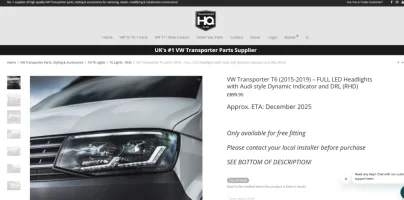
THQ now do the FULL LED kit.
still on V1 where they need to be fitted free by a local company.
V2 might be a DIY fit?
@cgtmiles has them.

Fiery Jack?I’d stick the video up their bum holes. Basically, everything I don’t like the sound of goes in a bum hole

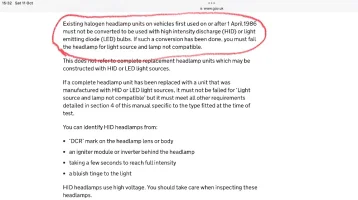
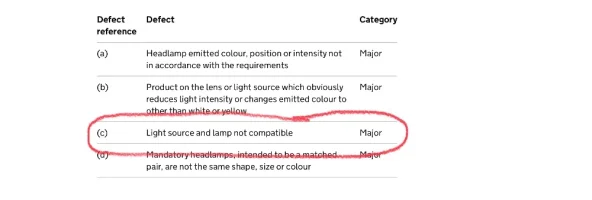
They (THQ with H7 LED bulbs) are illegal no matter what the MOT testers say. They are only assessing on their fixed criteria. Should your lamps cause a serious accident and the filth look closer, a world of trouble beckons. Not something which rests easy with me.just in case the mot station doesn't agree there legal

Very happy with mine, a good quality solution. I was told that the new batch would be supplied for fitting at home as no coding required but it looks like they haven’t updated the website to say that yetFYIW
THQ now do the FULL LED kit.
still on V1 where they need to be fitted free by a local company.
V2 might be a DIY fit?
@cgtmiles has them.
View attachment 306021
v2`s may still be in design stage?Very happy with mine, a good quality solution. I was told that the new batch would be supplied for fitting at home as no coding required but it looks like they haven’t updated the website to say that yet
on on the boat from china?
the website says december 2025? - so lets see.
if they are DIY and a lot cheaper id consider them.
but id wanna be around the £500 mark for the pair?
Indeed.They (THQ with H7 LED bulbs) are illegal no matter what the MOT testers say. They are only assessing on their fixed criteria. Should your lamps cause a serious accident and the filth look closer, a world of trouble beckons. Not something which rests easy with me.
Whether the tester can see them, hear them, feel them, talk to them, received a written confession, had a vision in their sleep or divined their presence with a ouija board is completely and utterly irrelevant.
If they know they're there - and they clearly do - its a fail. Complaining that they're really well hidden so the tester shouldn't know theyre there is pointless. They do somehow know theyre present, and its game over at that point.
They wouldn’t be a lot cheaper as the installation was supposedly free of charge but they should at least be on par with the t6.1 I guessv2`s may still be in design stage?
on on the boat from china?
the website says december 2025? - so lets see.
if they are DIY and a lot cheaper id consider them.
but id wanna be around the £500 mark for the pair?
Btw, mot passed with these fitted at dealer NP
Similar threads

- Replies
- 1
- Views
- 228


- Replies
- 34
- Views
- 3K


