Help me understand DPF

Flojo

New Member
Hi I’m collecting my newly converted T6.1 (T32 base) van next week. I’ve been warned about looking after the DPF filter and making sure I do a good run once a week so the van does a regen as I do lots of short journeys.

I’m paranoid about it starting a regen just as I get somewhere and not being able to turn the engine off, or switching off accidentally when it’s doing a regen and stuffing the engine up.

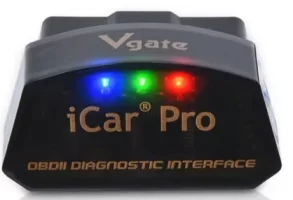
I think from research I need something like the Carista OBD and the Vag DPF app for iPhone, but will that allow me to work out when I need to make sure I give it a good run so it does a regen? If so what am I even looking for on the stats to tell me that?
 
  • Like
Reactions: CAB
Hi I’m collecting my newly converted T6.1 (T32 base) van next week. I’ve been warned about looking after the DPF filter and making sure I do a good run once a week so the van does a regen as I do lots of short journeys.

I’m paranoid about it starting a regen just as I get somewhere and not being able to turn the engine off, or switching off accidentally when it’s doing a regen and stuffing the engine up.

I think from research I need something like the Carista OBD and the Vag DPF app for iPhone, but will that allow me to work out when I need to make sure I give it a good run so it does a regen? If so what am I even looking for on the stats to tell me that?
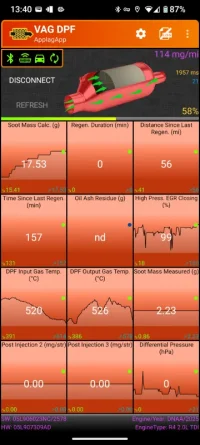
Yes it'll give you all sorts of information and it'll ping at you when it starts the regen. Display shows a nice easy to understand %age as well so you know when it's about to do it.

Screenshot_20260126-134011.webp
 
To explain how the DPF works to reduce emissions...

The DPF filters the soot from the exhaust in the filter and it collects there. When it gets to a certain level (around 30 grams) a regen starts that burns off the soot until it reduces to around 8 grams. These are the key numbers to see on the app. Other numbers include time and mileage since last regen etc

The other number to be aware of is the ash level. This is the stuff that collects in the filter that cannot be burned off. This takes years, and when it gets to around 110 grams you need to clean or ideally replace the DPF
 
Welcome to the forum.

No need to be monitoring it like a hawk, but it does help to understand what it does. And yes, short journeys aren't ideal for a modern diesel.

Have a read of this.

 
To explain how the DPF works to reduce emissions...

The DPF filters the soot from the exhaust in the filter and it collects there. When it gets to a certain level (around 30 grams) a regen starts that burns off the soot until it reduces to around 8 grams. These are the key numbers to see on the app. Other numbers include time and mileage since last regen etc

The other number to be aware of is the ash level. This is the stuff that collects in the filter that cannot be burned off. This takes years, and when it gets to around 110 grams you need to clean or ideally replace the DPF
Interestingly (or not) mine doesn't show a value for the ash residue. I think there was something in the app description about the DNAA engine not being fully supported ...

If I have it running in AA and I stop and restart the monitoring I get a very brief reading on the head unit. Hopefully an app update will fix it one day.
 
Last edited:
Interestingly (or not) mine doesn't show a value for the ash residue. I think there was something in the app description about the DNAA engine not being fully supported ...

If I have it running the AA and I stop and restart the monitoring I get a very brief reading on the head unit. Hopefully an app update will fix it one day.

Mine is the same
 
Important thing to understand it that it will only regen once it reaches it's 30g limit - for mine it's around 180miles of driving- until then any ' good runs' don't count. That's why a monitor is really useful. I was quoted £2500 for a new dpf, it's worth being paranoid about👍
 
  • Like
Reactions: CAB
This is what I did...

 
Back
Top