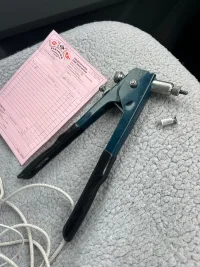
Short or long arm rivnut tool

Green Giant

Senior Member
VIP Member
T6 Guru
Hi
Going to fit some Awning brackets to van roof, but not sure if the long or short arm tool would be best, using about 8mm rivnut, is it just easier with the long set? never used this tool before, and probably won’t need to again, about £20 difference in price
Ta
 
I clicked on this just to find out what a “robot tool” was…

I find that the difficulty in setting riv nuts depends on the what they are made of. Aluminium versions are pretty easy to set, so an 8mm with a short tool should be okay, but if you plan on using stainless steel then I’d go for the long arm version.
 
I clicked on this just to find out what a “robot tool” was…

I find that the difficulty in setting riv nuts depends on the what they are made of. Aluminium versions are pretty easy to set, so an 8mm with a short tool should be okay, but if you plan on using stainless steel then I’d go for the long arm version.
Ha, yes edit done, thanks for advice, rivnut is
aluminium, bolts Stainless and obviously van and brackets are steel, is this going to be ok, no reaction between metals? It a Fiamma kit so hoping it’s tried and tested.. off to machine mart now to have a look
 
Picked up one of these earlier this year. https://www.amazon.co.uk/dp/B0DK4ZZY3S?th=1 Using stainless steel rivnuts. Works well. The long arm ones can snap the mandrel, if using a cheaper tool. The rivnut can deform slightly when being squeezed so I run a tap through before fitting a bolt with copperslip applied to make sure the threads are clear
 
I prefer to use aluminium assembly grease, rather than copper, when assembling differing metals. Ideally you want a more reactive metal (aluminium) as the sacrificial element than an unreactive one like copper.

Edit: link
 
Ha, yes edit done, thanks for advice, rivnut is
aluminium, bolts Stainless and obviously van and brackets are steel, is this going to be ok, no reaction between metals? It a Fiamma kit so hoping it’s tried and tested.. off to machine mart now to have a look
It’s going to fizz, bad enough mixing stainless steel and carbon steel without sticking aluminum in the middle.
No strength in aluminum’ better to use just about anything else.
 
I prefer to use aluminium assembly grease, rather than copper, when assembling differing metals. Ideally you want a more reactive metal (aluminium) as the sacrificial element than an unreactive one like copper.

Edit: link
Sorry was referring to Stainless steel bolts and stainless steel rivets

Point is to clean the threads with a tap and assume not perfect after that. Not sure whether either paste is better. Just been using Copperslip for 40 years and works fine for me. YMMV...
 
Last edited:
It’s going to fizz, bad enough mixing stainless steel and carbon steel without sticking aluminum in the middle.
No strength in aluminum’ better to use just about anything else.
I thought about the use of ally rivnuts but wondered if they were designed as a weak failure point should the awning take a hit / get caught by the wind?
 
Assuming it’s a wind out awning? Thule supply steel / SS rivnuts with their mounting kits. If it’s a 1 off install then you can fit them without the expense of a gun.
Check out YouTube for fitting without the tool.
The correct size bolt, washers, oversized nut, ratchet and oversized spanner. Then just tighten the bolt and the rivnut will compress and install snuggly.
I’ve used this method even with M10’s where there’s no access using the tool. BTW I have the long arm pro tool. They can destroy the thread if over tightened.
 
I managed to hire a small set for £5 for the weekend, was told they will be ok for the 6 mm Aluminium nuts that are supplied with the bracket kit, I’m not mounting a traditional wind out awning, but a shower cubicle type tent, it’s a bit of an experiment.. as I’ve not seen one fitted to a t6 van yet, I’ll post a photo tomorrow (if it actually fits and works)IMG_6015.jpeg
 
Back
Top