Leisure battery planning - advice needed

Yeah I wondered that too. I guessed it was so you could run 12v stuff of the leisure when parked up, without depleting the main battery. But I’ve learned to hate those 12v fag sockets, they’re not reliable, and get very hot. I’ve used a couple of xt60s for my fridge and fan for hot nights - much better.
Oh yeah not great, but I use mine for a low profile usb c fast charger 💪🏼 they are good for that at least
 
Awesome thank you! I have already moved the wires to the drivers side as well, though just now unsure about running the XS 50 at the max 50A, as the wire size is not the required 16mm2, but it seems ok for 30A?

Did you put another fuse on it?
16mm2 is way overkill for 50A, 10mm is more than enough. And even that’s erring on the cautious side.
 
I mean looking it up, 10mm2 can handle 70A - so why do Victron recommend 16mm2?
 
Probably because they want to err on the side of caution and avoid potential problems, e.g. maybe the start-up current surges a bit (like compressor fridges), or maybe the resistance increases when it warms up (think I remember something about this from O'level physics). Either way, if something bad does happen Victron/Fogstar/van insurance might be reluctant to help/pay out if you cut corners - it's only a few quid for wire, why not use something chunky?
 
I mean looking it up, 10mm2 can handle 70A - so why do Victron recommend 16mm2?
10mm2 will handle 70A only on a very short run in much the same way as a blade fuse which also has a small cross sectional area CSA.
Your house supply uses 25mm2 meter tails to pass the supply from a 100A fuse, you always want to build in a bit of headroom especially if you're hoping to run mains voltage 2 or 3 kW appliances in the future.
I have two 4 guage cables paralleled per live and neutral to my 2kW inverter rather than a huge 0 guage single conductor each time this made it easier to route the cables.
Do cut all four cables to the same length prior to installation to make sure each conductor carries a quarter of the potential current and you don't have a shorter one doing more of the lifting and getting hot... yep that's the one that will blow if the fuse doesn't.
Cable lugs can be doubled up using crimp lugs on bolt type terminals or if struggling to get two fat cables into a screw terminal use an inline pin crimp or be naughty and 2 in 1 out through crimp, all these bare tinned copper lugs will need to be wrapped in the right colour, red or black PVC phase tape to insulate.
Look at an AWG (American Wire Guage) to metric conversion chart to compare cable types and be aware that cable marked CCA ( copper clad aluminium) carries less current than pure copper of the same CSA so you need to jump up a size with the CCA.
 
Yeah exactly. I need to go into the bulkhead to do pull the heater washer jet wire through soon, so i will just pull some 16mm2 wire through at the same time.
10mm2 will handle 70A only on a very short run in much the same way as a blade fuse which also has a small cross sectional area CSA.
Your house supply uses 25mm2 meter tails to pass the supply from a 100A fuse, you always want to build in a bit of headroom especially if you're hoping to run mains voltage 2 or 3 kW appliances in the future.
I have two 4 guage cables paralleled per live and neutral to my 2kW inverter rather than a huge 0 guage single conductor each time this made it easier to route the cables.
Do cut all four cables to the same length prior to installation to make sure each conductor carries a quarter of the potential current and you don't have a shorter one doing more of the lifting and getting hot... yep that's the one that will blow if the fuse doesn't.
Cable lugs can be doubled up using crimp lugs on bolt type terminals or if struggling to get two fat cables into a screw terminal use an inline pin crimp or be naughty and 2 in 1 out through crimp, all these bare tinned copper lugs will need to be wrapped in the right colour, red or black PVC phase tape to insulate.
Look at an AWG (American Wire Guage) to metric conversion chart to compare cable types and be aware that cable marked CCA ( copper clad aluminium) carries less current than pure copper of the same CSA so you need to jump up a size with the CCA.
Thats really useful thank you, think i will definitely go for 16mm2, found this in here in Germany which looks good, German made.etc:

 
They likely opt for the 16mm for two reasons:

1) They are quoting at up to 5m. At 5m of 10mm at 50A, you're talking about almost 1V of voltage drop, which is problematic on the leisure battery end. Most people will have way less than 5m in reality so the voltage drop will be much less of an issue.

2) The fuse sizing becomes less critical. A 10mm cable should be good for up to 70A, and therefore should be fused at less than that but the device itself can hit 50A so really the only safe choice is a 60A fuse. A 16mm cable gives more headroom between the fuse max current and cable max current.

Given this, I can understand why they specify 16mm but on a short run, with appropriate fusing, I'd be happy with 10mm.

 
They likely opt for the 16mm for two reasons:

1) They are quoting at up to 5m. At 5m of 10mm at 50A, you're talking about almost 1V of voltage drop, which is problematic on the leisure battery end. Most people will have way less than 5m in reality so the voltage drop will be much less of an issue.

2) The fuse sizing becomes less critical. A 10mm cable should be good for up to 70A, and therefore should be fused at less than that but the device itself can hit 50A so really the only safe choice is a 60A fuse. A 16mm cable gives more headroom between the fuse max current and cable max current.

Given this, I can understand why they specify 16mm but on a short run, with appropriate fusing, I'd be happy with 10mm.
This is why its ok to use the factory wire i guess then, which is easily under 5m to the fusebox by the battery. In two mind whether to use that, or just be sure and get a decent 16mm2 cable and 60A fuse, just to be safe :) Probably the latter
 
This is why its ok to use the factory wire i guess then, which is easily under 5m to the fusebox by the battery. In two mind whether to use that, or just be sure and get a decent 16mm2 cable and 60A fuse, just to be safe :) Probably the latter

By the factory wire, I assume you mean the one from the fusebox by the starter battery to under the seat? If so, it just comes down to what it's fused at by the factory. You can assume (you'd hope!) that the factory fuse is sufficient to protect the cable itself and therefore if it's fused above the maximum draw of the device (can't be more than 60A given that's the minimum fuse recommended in the manual) you're good to go. Note that the voltage drop is less critical at this input end because the voltage is naturally flying around all over the place anyway so the device will cope. The voltage drop is much more relevant at the charger->leisure end because multi-stage chargers rely on relatively precise voltages at the output to work properly.
 
By the factory wire, I assume you mean the one from the fusebox by the starter battery to under the seat? If so, it just comes down to what it's fused at by the factory. You can assume (you'd hope!) that the factory fuse is sufficient to protect the cable itself and therefore if it's fused above the maximum draw of the device (can't be more than 60A given that's the minimum fuse recommended in the manual) you're good to go. Note that the voltage drop is less critical at this input end because the voltage is naturally flying around all over the place anyway so the device will cope. The voltage drop is much more relevant at the charger->leisure end because multi-stage chargers rely on relatively precise voltages at the output to work properly.

Assuming the original factory fuse is >=60A there's nothing stopping you putting a more conservative 60A fuse in its place if that gives you peace of mind - way easier than rerunning the actual cable.
 
Seen some posts that suggest its fused to 100A, but i am hoping it is useable - would save me having to run a wire! Would add a 60A fuse on the end of it either way
 
Last edited:
3190.webp
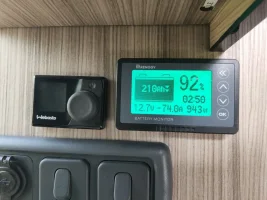
That's what a 1kW watt travel kettle looks like running from a Renogy 2kW inverter so pulling 74A at 12.7 Vdc from the leisure battery, logically it's going to be 150A when getting nearer to the potential 2kW.
 
  • Like
Reactions: CAB
View attachment 313921
That's what a 1kW watt travel kettle looks like running from a Renogy 2kW inverter so pulling 74A at 12.7 Vdc from the leisure battery, logically it's going to be 150A when getting nearer to the potential 2kW.
But that's only if having an off grid system right? I'd personally only use such things on hook up with what I'm planning to do
 
But that's only if having an off grid system right? I'd personally only use such things on hook up with what I'm planning to do
That's right but then who wants to only camp where there's a hook up... Clean water, proper bogs and showers and we're on the same page but saving £5 per night on a non EHU pitch means it will only take 10 years to pay for that smug electrical independence. :thumbsup:🤕:geek:
 
Now I've learnt about the unsuitability of Midi fuses for Lithium batteries, so need to buy a MRBF fuse. 100A one on 100A battery?
 
Fuse size is dictated by cable size and vice versa, if you want a cable to carry 100A then you need to decide how long the cable run is going to be as that will decide the CSA, basically the longer the cable run the fatter the copper needs to be.
Also just because a battery is rated at 100Ah this doesn't mean it won't pass many hundreds, possibly thousands of Amps into a short circuit (lithium especially with its low internal resistance), the 100 Amp Hour rating roughly means that the battery can supply 1A for 100hrs or 100A for one hour and is the capacity of the battery.
Put another way you could connect two 100A fuses for two separate supplies no problem but empty the 100Ah battery in 30 minutes hence the attraction of larger batteries.
You shouldn't have a problem using midi and maxi fuses with lithium?
 
Back
Top