(Another) Mysterious Coolant Loss

  • Thread starter Thread starter Deleted member 81660
  • Start date Start date
D

Deleted member 81660

Guest
Hi all,
I have a 2015 T6 2.0 TDI 140 with a Euro 5 engine, done 135k.
It has a mysterious coolant loss (shock). Started using coolant - no visible leaks. Took it into VW van centre. Then pressure tested it with no signs of external leakage. Put a dye in and no signs of the dye anywhere. Took it to an Indy VW garage and then instantly said head gasket. Head gasket was changed and coolant still going down. So they replaced the head gasket again and coolant still going down. I suggested EGR having read about them on the forum but I was told that it’s highly unlikely the EGR is leaking on the Euro 5 engine and that they’d never known one to go on Euro 5. Not sure if either garage checked the heater core. The passenger footwell is sometime damp but doesn’t really smell sweet like coolant, more like damp musty water.
Goes from max to min in 500 miles of normal day to day driving (local work commute etc) but if it goes on the motorway will go from max to min in as little as 120 miles.
Any help appreciated - thank you
 
Warped head?
Cracked head?

Does it have a water cooled EGR?.... If so could be the EGR leaking coolant into the inlet stream and bring ingested.

The T6 also has a water cooled, "charge air cooler" aka intercooler. That can leak.
 
Last edited:
I’ve wondered myself if it’s a warped or cracked head but if I have a new one fitted and still uses coolant then it’s a lot of money for nothing. I guess there’s no way of testing for cracks in the head? The Indy said that the head had been sent away and pressure tested but not sure if that shows up cracks etc?

Looking at pictures on other threads I don’t think it has a charge air cooler but may have the water cooler. But the Indy said he’d never seen one on the Euro 5 engine. Plenty on the Euro 6. Do you know if there’s any way of bypassing the system - my thoughts being if the system is bypassed and doesn’t use coolant then it would point to that being the fault?

Thanks for replying 👍🏻
 
You said it was...

2015 T6 2.0 TDI 140 with a Euro 5 engine, done 135k.

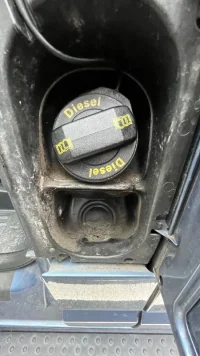
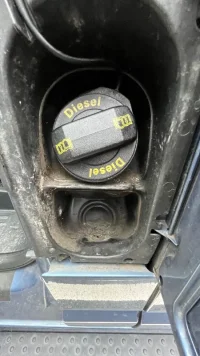
It's it at 5.1? With a Euro5 engine? (Post a few pics of the van to see)


What's the engine code?

It will be on the build sticker under the dash.

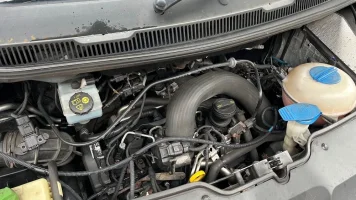
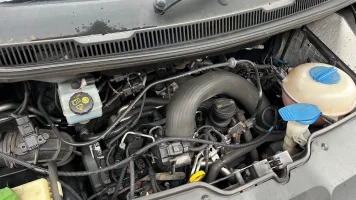
Also post some pics of the engine bay etc.

.
 
You said it was...

2015 T6 2.0 TDI 140 with a Euro 5 engine, done 135k.

It's it at 5.1? With a Euro5 engine? (Post a few pics of the van to see)


What's the engine code?

It will be on the build sticker under the dash.

Also post some pics of the engine bay etc.

.
You said it was...

2015 T6 2.0 TDI 140 with a Euro 5 engine, done 135k.

It's it at 5.1? With a Euro5 engine? (Post a few pics of the van to see)


What's the engine code?

It will be on the build sticker under the dash.

Also post some pics of the engine bay etc.

.
It’s an early T6 - November 2015 registration so just on or after crossover from 5.1 to 6 I believe with a CAAC engine. Doesn’t take adblue - which both VW and Indy garages saying is Euro 5.

IMG_9339.webp

IMG_9340.webp

IMG_9340.webp

IMG_9339.webp
 
Caac.


T5.1: EU5 (sept 2009 to 2016)
2.0 TDI CR - CAAA 84ps
2.0 TDI CR - CAAB 102ps
2.0 TDI CR Blue motion - CAAD 114ps
2.0 TDI CR - CAAE CCHB 136ps
2.0 TDI CR - CAAC CCHA 140ps
2.0 BiTDI CR - CFCA 179ps - (EGR cooler issues pre rev D that can cause engine wear)(RevD EGR onwards are ok) (if you have a CFCA that's loosing coolant - get the van looked at immediately and tested for a leaking EGR c
ooler)

I think that has an air-cooled inter cooler.

So most likely a EGR problem?. ... When was the EGR last replaced?

Is the engine good?.. no signs of water mix or increased level?
 
Came join as a VIP.


And get access to all the engine documents...


.

.Screenshot_20250624_080959_Chrome.webp
 
I’ve wondered myself if it’s a warped or cracked head but if I have a new one fitted and still uses coolant then it’s a lot of money for nothing. I guess there’s no way of testing for cracks in the head? The Indy said that the head had been sent away and pressure tested but not sure if that shows up cracks etc?

Looking at pictures on other threads I don’t think it has a charge air cooler but may have the water cooler. But the Indy said he’d never seen one on the Euro 5 engine. Plenty on the Euro 6. Do you know if there’s any way of bypassing the system - my thoughts being if the system is bypassed and doesn’t use coolant then it would point to that being the fault?

Thanks for replying 👍🏻
They can pressure test a head, or use some kind of dye that shows up cracks under UV light.

Has cooling system been pressure tested? A pressure test and a mechanics stethoscope might identify the leak.
 
Last edited:
You could try clamping off the water supply


Or

Bypassing the cooler


...


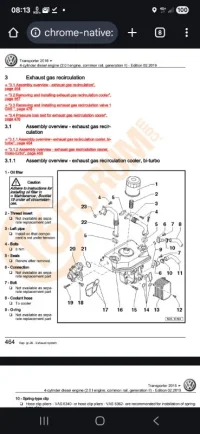
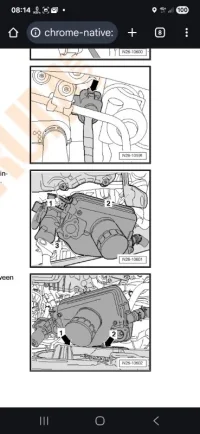
Screenshot_20250624_081327_Chrome.webpScreenshot_20250624_081419_Chrome.webp
 
I think it's one of the very early Frankenstein vans.

A T6 chassis with a T5.1 Eu5 engine in.

They were made in the first few months at the change over.

A few pics of the front and side of the van would confirm.

But defo looks like a caac Eu5 engine.

Air intercooler, but water EGR cooler.

Is be surprised if it's the original EGR after 135k miles?... If expect it's too be due it's second one by now?
 
Thanks both,
I’ve been through the service history and can’t find any evidence the EGR has been changed. So might be worth a look.
The head has been pressure tested twice when the head gaskets were changed (twice) but didn’t show anything.
Do the diagrams above show how to clamp or bypass the cooler? I’d give it go before spending more money on new parts.
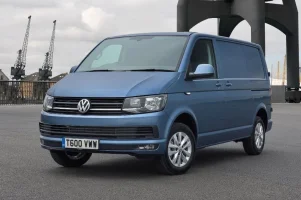
Don’t have any photos of my van on me right now but it basically looks like this one - just a different colour

IMG_9352.webp
 
Other than the coolant issue the engine seems great - plenty of power, relatively good on diesel and doesn’t use a drop of oil. No increase in oil level on the dipstick and no signs of any white gunk on the dip stick or filler cap
 
@Raldex1701 Don’t isolate the cooling water from the EGR cooler with the engine running. The cooler isn’t designed to operate without cooling water, subjecting it to exhaust gas temperatures with most likely buckle it and then it will definite leak.
The cause of the coolant loss is almost certainly the EGR. If it has never been renewed it will be fouled with carbon anyway.
Don’t delay the repair, there are plenty who have and suffered a hydrolock and bent connecting rod.
 
@Raldex1701 Don’t isolate the cooling water from the EGR cooler with the engine running. The cooler isn’t designed to operate without cooling water, subjecting it to exhaust gas temperatures with most likely buckle it and then it will definite leak.
The cause of the coolant loss is almost certainly the EGR. If it has never been renewed it will be fouled with carbon anyway.
Don’t delay the repair, there are plenty who have and suffered a hydrolock and bent connecting rod.
Thank you , good advice. Is there any safe way to test or bypass the EGR? just a bit hesitant to spend more money that may not solve the issue. I get your point on delaying it and potentially causing more issues though
 
Thank you , good advice. Is there any safe way to test or bypass the EGR? just a bit hesitant to spend more money that may not solve the issue. I get your point on delaying it and potentially causing more issues though
Ideally you want a hydrostatic test pump but I’ve tested EGR coolers with mains water supply, however you need to be careful not to over-pressurise and keep the hose lengths as short as possible between the inlet isolation valve and discharge isolation valve on the test rig.

1. Disconnect the cooling system hoses while the system is cold and plug or join them together to avoid coolant loss.
Do not run the engine until the system is back together on the cooler!
2. Rig a short hose to one of the EGR hose tails with an easily accessible isolation valve, T in a pressure gauge with a range of approx 2 bar.
3. Rig a short hose to the other EGR hose tail with a easily accessible isolation valve at the end.
4. Connect hose #2 to the water main with the isolation closed and the isolation valve on hose #3 open.
5. Slowly open isolation valve on hose #2 and water will flow through the cooler to the floor (do it outside or use a bucket).
6. Throttle the isolation valve on hose #2 until there is minimal flow, make sure no air is trapped in the test system including and T for the gauge.
7. Slowly close the discharge valve on hose #3.
At this point it is easy to over-pressurise! Close the inlet isolation valve on hose #3 and when the pressure on the gauge is at 1bar (approx’ 15psi) close the inlet isolation valve on hose #2, do not exceed this pressure, vent some water at the discharge valve if needed.

With both valves closed after 5 min’s or so the pressure should stabilise as the hoses expand and settle, the reason why you should keep the hoses short and stiff. Ideally use engine cooling system hose.
Once settled any leak will become apparent as you are carrying out a pressure drop test with the EGR cooler isolated from the rest of the cooling system, note that for an effective test you can’t have any leaks in the test rig and the ambient temperature / cooler temperature is stable.
It is also important not to move the test rig as bending hoses will increase the gauge pressure.

Be aware that any leak within the EGR cooler will be going into the engine cylinders eventually.
Note that many EGR coolers only leak when hot, don’t do this test with a hot EGR cooler.
 
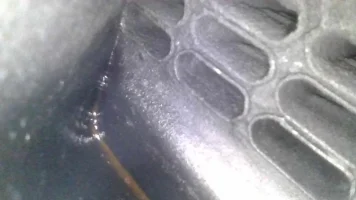
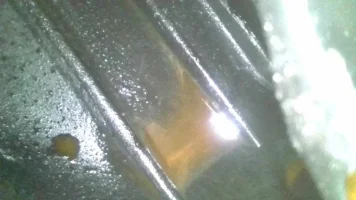
Anyone want to confirm my suspicion that the line of orange, and dampness, I see in my EGR cooler is most likely coolant. EGR is 30,000 miles old on a 95,000 mile van. It is using coolant.
IMG_0010.webp
There is a pretty obvious pool of coolant in the intake manifold, below the throttle body.
IMG_0019.webp
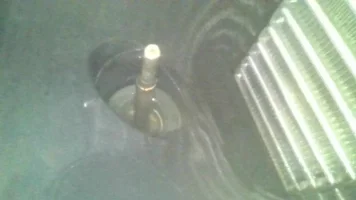
I am just not certain it isn't coming from the charge cooler as the matrix in there looked damp on camera.
IMG_0012.webp
 
Anyone want to confirm my suspicion that the line of orange, and dampness, I see in my EGR cooler is most likely coolant. EGR is 30,000 miles old on a 95,000 mile van. It is using coolant.
View attachment 294987
There is a pretty obvious pool of coolant in the intake manifold, below the throttle body.
View attachment 294988
I am just not certain it isn't coming from the charge cooler as the matrix in there looked damp on camera.
View attachment 294989
I have since confirmed it is the EGR cooler at fault.
 
  • Like
Reactions: CAB
I had mysterious coolant loss for a while - maybe half a liter every 6 month. Done test with vapour, negative; test with blue liquid in the coolant reservoir negative. Pending further investigations I went around - In the last 3 days loosing around a liter every 400km. New blue liquid test in the coolant reservoir positive with change of colour to yellow in few seconds - they mentioned it is the head then. No evident water in oil, no evident leak otherwise of coolant after deep analysis. Currently in Greece. I doubt I will manage to return / may be worth getting repaired here… seems as if this time is not the usual suspect of the egr intercooler :( would have been nice but reading the forum I still wonder…
 
  • Sad
Reactions: CAB
Back
Top