Coolant loss and intake runner stuck open/closed

sams-vans

Member
VIP Member
T6 Pro
I know these issues are well documented. However, I wanted to consolidate information as I progress through the diagnostics and fixes of the issues in my van - hoping it will help someone else in the future.

The Van
2018 T6 150ps CXHA - at 95000 miles. I have owned since 91000 miles.

History
69k miles - EGR replaced (coolant loss)
83k miles - Intake manifold replaced (assume intake runner stuck, but not documented)
93k miles - Intake manifold replaced (intake runner stuck)

Symptoms
Coolant loss. Pressure test fail. No smoke or visible sign of leaks when pressure tested. Suspect EGR again and this follows the circa 30k mile lifespan of most EGRs.

Next steps
Isolate coolant leak - bypass EGR coolant circuit and pressure test
Test intake runner solenoid - vacuum and electric (if possible)

My hope is the root cause is the faulty EGR leaking coolant into the intake system that is fouling the runners. In which case I'll replace the EGR and do a chemical clean of the intake manifold. With fingers crossed that will be that.
 
I looked inside my EGR cooler via the front manifold pipe. It was visibly wet looking inside.

 
Update, after the van sat for a week. First cold start, setting off it stumbled a couple of times, some white smoke out of the exhaust for a minute, I turned for home and it cleared and the van then ran fine all day. Until on the way home, 2 hours later the coolant light came on and the runner stuck coil light came on.
So I got around to pulling the rubber pipe from the charge cooler to the throttle body off and the EGR pipe from the EGR cooler to the throttle body.

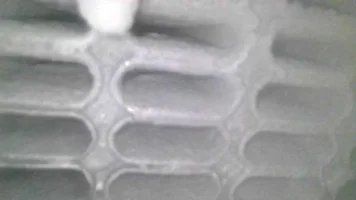
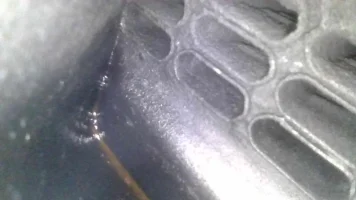
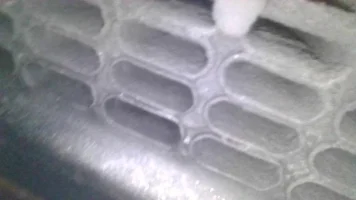
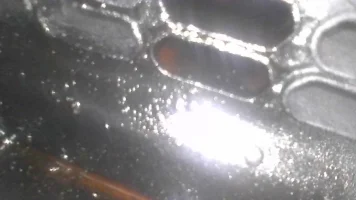
I pressurised the coolant system and then stuck an endoscope around anywhere I could get at.

The EGR cooler did not visibly leak. No excessive wetness in the EGR pipe or on the cooler matrix. But there is a suspect line of colour that could be coolant, at the bottom (or is that a gasket?).

IMG_0016.webpIMG_0010.webpIMG_0009.webp

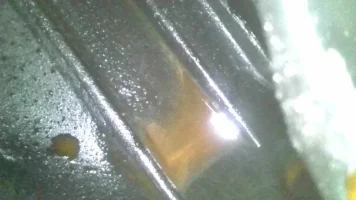
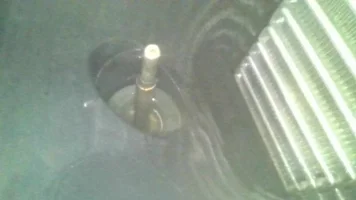
However, in the intake manifold there appears to be a coolant pool

IMG_0019.webp

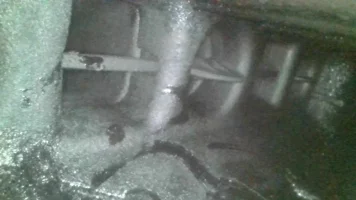
The charge cooler matrix did appear damp, but green, not pink. There were also a few spots of liquid on the EGR pipe end that is inside the throttle body - which would be above that pool of coolant shown above.

IMG_0012.webp

Finally, intake runners don't look too bad (I have seen much worse).

IMG_0018.webp

So I think I have evidence of coolant in the intake manifold. It looks more like it is coming from the charge cooler than the EGR. But this is not conclusive. Certainly not if the photos above do show a line of coolant in the EGR.

I need a way to prove where the coolant leak is.
 
Not too hard to remove the charge cooler - certainly easier than the EGR - and bench test it?

I found it quite a job to remove the EGR cooler, but also do-able on the driveway.

I was able to bench test the cooler by blocking the large flange/connection surface where it joins to the EGR valve housing, using a bit of ply and a foam sheet as a gasket, filling the matrix with water, and lightly pressurising it with an air-line. Bubbles came out, proving it leaked.

Also... on mine, the mating surface of the EGR housing was quite corroded/pitted, and I suspect coolant may have been leaking through there as well as the matrix itself, but harder to test. I cleaned it up and used high temp sealant as well as the gasket - not the proper fix, I probably should have replaced the entire unit, but so far so good.

HTH
 
With some received wisdom I took a different approach to diagnosis.

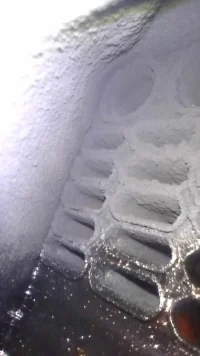
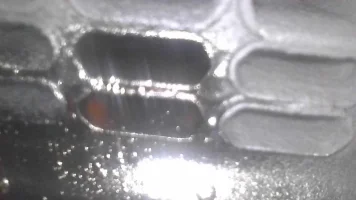
This time I ran the van up to full operating temperature before removing the EGR gas link pipe to inspect the EGR cooler once more. This time, it is really very obvious what is going on:

IMG_0021.webpIMG_0027.webpIMG_0028.webp

Wet coolant is clearly visible in the cooler matrix.

(Side note: even while hot the coolant system did not drop pressure quickly)

So, I am up for the third EGR module in this van has in just 95k miles. Only question is do I take a day of my own time to replace it.
 
I have begun the rather unpleasant task of changing the EGR myself (on my DSG, 150 ps van). It is a pig of a job. If you can avoid doing it yourself, I would strongly recommend it.

What I learned so far:

  1. I don't think you need a hose pipe clamp tool, but it does make the job easier
  2. The bottom nut on the EGR, on my model van, is concealed by solid coolant pipes. It feels and like you cannot get any type of tool on there to loosen the nut. But from the top you can bend/push the pipe out of the way to get a socket on. I wasted time and money trying to solve this with tools.
  3. You do need to get the starter out, but it's relatively easy.
  4. The bottom bolt, with the 5mm hex head (there are 3 in total). I could not get this bolt out. I could not get the new EGR on. So I cut a notch out of the lower EGR mounting bracket so that the EGR could just push on. This worked.
  5. I used a crow bar to force the old EGR off of that bottom bolt which allows it to lift out
  6. I put a thin smear of silicone grease on the outside of the rubber bridge pipe, between the head and EGR. This allowed the EGR to slide on relatively easily.
  7. Take photos or videos of key steps and pipe arrangements. It's a maze of black, weird, awkward pipes and bolts. No way I could remember how it all goes back together.
It's a slow old process to get the EGR out on a DSG van (for a first timer). Probably faster when you know exactly what steps to follow and tools you need. I would never, ever want to do this again. It's been a bit easier going together so far.
 
I also must mention.

I bought an EGR kit from vwvanpartsdirec.co.uk because it explicitly states it includes, the EGR, bolts, gaskets and (crucially) the front and rear pipes. I did not receive those pipes and the seller has not responded to phone calls or email - as I seek to clarify or rectify.

It might be because the pipes used to cost about £25 and now cost £125. But if you advertise a product, you must sell that product.

I am not happy with the business practice or customer service and strongly advise you do not use this company.
 
Work completed to replace the EGR module and road tested OK.
I ran diagnostics on the road to confirm the intake runner flap was operating and responding as expected - and not throwing the error code. So far so good, but too early to be definitive. I need to prove the intake manifold is actually OK, with some motorway miles, and that it was only the ingestion of coolant, from an active fault in the EGR, causing the intake runner issue.
 
Well... the intake runner did throw up a stuck open/closed fault eventually. I then learned that having fixed the EGR and run a can of intake cleaner through it, it is was probable the intake runner was operating differently to the learned values and could throw up the error.

So with VCDS I ran the "Test intake runner" basic setting function. Then did an hour long road test. No intake runner faults. I will run the van for another couple hundred miles to further confirm this has helped.
 
Final (I hope) update

The van did throw another intake runner stuck open/closed that after a key on-off reset and didn’t reappear.

I then ran the relearn intake runner position process with VCDS another time.

Several hundred miles later and I no longer get any codes or issues.

I think if you’re experiencing similar faults and have sorted out the EGR. Don’t immediately despair. There is a chance that a chemical clean, several relearning processes over time will sort out the issue. But honestly you need to know the condition of your intake. In my case I knew it wasn’t bad to begin with.
 
Update, after the van sat for a week. First cold start, setting off it stumbled a couple of times, some white smoke out of the exhaust for a minute, I turned for home and it cleared and the van then ran fine all day. Until on the way home, 2 hours later the coolant light came on and the runner stuck coil light came on.
So I got around to pulling the rubber pipe from the charge cooler to the throttle body off and the EGR pipe from the EGR cooler to the throttle body.

I pressurised the coolant system and then stuck an endoscope around anywhere I could get at.

The EGR cooler did not visibly leak. No excessive wetness in the EGR pipe or on the cooler matrix. But there is a suspect line of colour that could be coolant, at the bottom (or is that a gasket?).

View attachment 294842View attachment 294843View attachment 294844

However, in the intake manifold there appears to be a coolant pool

View attachment 294845

The charge cooler matrix did appear damp, but green, not pink. There were also a few spots of liquid on the EGR pipe end that is inside the throttle body - which would be above that pool of coolant shown above.

View attachment 294846

Finally, intake runners don't look too bad (I have seen much worse).

View attachment 294847

So I think I have evidence of coolant in the intake manifold. It looks more like it is coming from the charge cooler than the EGR. But this is not conclusive. Certainly not if the photos above do show a line of coolant in the EGR.

I need a way to prove where the coolant leak is.
Hello, my car has been losing coolant for the past year. Initially, there were marks on the radiator itself, and after replacing it, the coolant continued to leak. Now we can't find any leaks; it passed the pressure test and there were no problems. A CO2 test was done, but there was a 10% color change, and the mechanic couldn't fully diagnose the issue. However, something you wrote caught my attention: I started my car this morning, and on the first start, it ran with such a knocking sound that I thought there was an earthquake. I stopped the engine thinking something was wrong, then restarted it, and it ran with this knocking sound for about 10-15 seconds before settling down. This only happened once in the last year since the coolant started leaking. I thought this knocking might be due to water mixing with the fuel because I never considered these problems before. I've been getting my fuel from the same place for 10 years, but this is the first time this has happened to me. Have you experienced the same thing? Could it be that the coolant reached the pistons overnight and accumulated there?
 
Hello, my car has been losing coolant for the past year. Initially, there were marks on the radiator itself, and after replacing it, the coolant continued to leak. Now we can't find any leaks; it passed the pressure test and there were no problems. A CO2 test was done, but there was a 10% color change, and the mechanic couldn't fully diagnose the issue. However, something you wrote caught my attention: I started my car this morning, and on the first start, it ran with such a knocking sound that I thought there was an earthquake. I stopped the engine thinking something was wrong, then restarted it, and it ran with this knocking sound for about 10-15 seconds before settling down. This only happened once in the last year since the coolant started leaking. I thought this knocking might be due to water mixing with the fuel because I never considered these problems before. I've been getting my fuel from the same place for 10 years, but this is the first time this has happened to me. Have you experienced the same thing? Could it be that the coolant reached the pistons overnight and accumulated there?
I didn’t get consistent results pressure testing the coolant system. This is well documented and established wisdom with our EGR diagnosis. It can hold pressure. Overnight tests don’t reveal anything. But I found running the van up to temperature, pulling the pipe off the EGR and sticking a camera in there and coolant was clearly visible. To me the EGR leaks at operating temperature, not when cool.

It’s very possible coolant leaks into your cylinder while sitting still after a journey.

I’m sure this leak helped the following failures: intake manifolds, glow plug, 2 injectors.

The only way I think you can diagnose the EGR is with a camera and the van hot enough for the alloy to expand and leak under pressure.
 
I didn’t get consistent results pressure testing the coolant system. This is well documented and established wisdom with our EGR diagnosis. It can hold pressure. Overnight tests don’t reveal anything. But I found running the van up to temperature, pulling the pipe off the EGR and sticking a camera in there and coolant was clearly visible. To me the EGR leaks at operating temperature, not when cool.

It’s very possible coolant leaks into your cylinder while sitting still after a journey.

I’m sure this leak helped the following failures: intake manifolds, glow plug, 2 injectors.

The only way I think you can diagnose the EGR is with a camera and the van hot enough for the alloy to expand and leak under pressure.
If a double like is possible this one deserves it. Needs to be copied and pasted into every EGR / charge cooler leaking discussion.
In industrial heat exchangers there are flexible packings and in some cases sliding mounts that deal with thermal expansion, the auto world design engineers don’t appear to be aware of this.
 
Back
Top