
Manky Tank? - Fresh Water Tanks on a CamperVan - How I Done It -
How clean is your tank?
How often do you clean your tank?
When should i clean my tank?
What if i dont clean my tank?
Whats all the fuss about anyway?
This comes up now and again, so after fitting my own 60L fresh tank i thought it was time to look into it.
Now i know nothing about water tanks . . i do electrics and mechanicals.
but luckily i know a man who does, My Brother. - Hes the man who knows, so i reached out to him for help.
Hes offered to do us a write up that i can on here for every one.
so over to him . . . . .
Me & Adam at the BTCC the other year,

+++++++++++++++++++++++++++++++++++++++++++++++++++
VAN WATER TANK MAINTENANCE & HYGIENE:
With over 20 years in water treatment and hygiene, I'm well versed in the regulations and guidance for the maintenance of domestic water systems. Although the guidance doesn't apply to homes or indeed campervans, they provide a good basis that we can apply to the campervan environment.

lets get started . . . .
THE DANGER!:
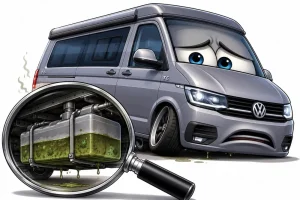
The water tank in your van, if not maintained, could become a silent killer. Just like a diesel heater could fill the van with harmful gas, a water tank could harbour life threatening bacteria without any obvious signs.
Many forms bacteria can growth rapidly in a water tank which can cause minor illness, however our biggest concern is the bacterium Legionella.
If your water tank has been infected with Legionella Pneumophila Bacteria, the stored waters could be atomised or allowed become aerosol through use of a shower head, spray taps or just splash back from the sink, if this aerosol is breathed in the bacteria could infect the lungs resulting in Legionellosis.
THE DISEASE:
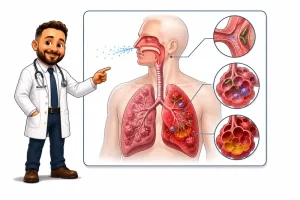
Legionellosis infection is a respiratory disease and could take 2 forms.
1. Pontiac Fever - A mild flu like illness.
2. Legionnaires Disease - A severe potentially fatal form of Pneumonia.
Both will start with a cold, then flu symptoms, before moving to Pneumonia in LD.
Incubation period, at which point you notice signs of illness, is 3 to 10 days.
Those more susceptible to the disease are the following.
• Over 50 years of age
• Biological males
• Alcholics
• Smokers
(Anyone ticked all four so far?)
• and the immunosuppressed.
As with most bacteria they are hardy and can survive for extended periods of time in aerosol, as seen in a case in Norway were it was proven that contaminated aerosol infected humans up to 6 miles from the source, therfore you do not need to be in direct contact of the source in your van.
The disease is NOT contagious and there have been zero cases of one human passing the disease onto another, unlike the Covid pandemic.
If caught early enough, modern medicine can treat most cases of the disease.
THE CONTAMINATION:

So how did we get the bacteria in the water tank in the first place?
Well... in truth the bacteria is found I'm many natural water sources such as lakes and streams, however it could also be found in the mains water at home, at a service station filling point or at a camp site drinking point to name a few, although the levels should be extremely low if present, if we do not maintained our water tank and distribution system this potential bacteria could multiply rapidly to dangerous levels and develop biofilm on the tank walls and pipework, creating a safe haven for the bacteria to multiply and re-infect.
And we cant forget the distribution system, we should not only be focused on the tank itself, the pipework connected is also a risk factor.
THE MAINTENANCE:

There are a number of key point for maintaining a healthy water system.
• Keep cold water below 20'C, this minimises binary fission keeping the number of bacteria to a minimum.
• Keep the hot water above 50'C, this kills the bacteria.
• Keep the water moving, stagnation will promote binary fission.
• Keep the system clean.
• Drain down the system.
• Chemical additives.
Easier said then done in a campervan, right?
So let's break these down further...
• Can you maintain constant temperature levels stated above? Well I guess that depends on how advanced your set up is, although I would imagine for most this is not possible, therfore we risk our water operating at temperatures that promotes bacterial growth (20'C - 45'C)
• Can you keep the water moving? Well yes, during travel the tank will slosh about, which will help, however when we state moving we need to think more "turn over", such as using water and flushing through the distribution system such as taps and refilling with fresh cold water. Having a large tank filled with water for 2 weeks with minimal use and no refilling allows for stagnation and bacteria growth.
• Can you keep the system clean? This is more tricky, can you physically clean the inside of the tank or the pipework? Probably not in most cases, especially an underslung tank. Therfore turn-over is critical with chemical intervention.
• "I just drain the tank after each use" Unfortunately this is not a best practice as draining the tank would only be effective if ALL water was removed, which is not possible. Is your drain valve on the side of the tank, maining some water remains? Are you blasting air throught the tank and hoses untill completely dry? Unlikely! Which means after every drain down the residual water can stagnate. Think of the mould that can build up in a bathroom around the bath or sink, or the state of a bucket of water left in the garden for too long, or how a fish tank slowly gets discoloured and smells bad... this could be happening in the tank.
PREVENTION AND CURE:

In reality, the best approach will be chemical additives, however based on all the above we should approach this with either a CURE to an existing tank, or PREVENTION to new un-wetted tank (or just gone through the cure stage)
CURE:
So assuming we have an existing tank and after reading this we realise that maybe the tank maintenance has not been the best and we are worried about contamination. A high strength disinfectant should be added to the tank, however one caveat to this is the chemical type, we need to ensure we use a chemical that can break down the biofilms, for example a chlorine based product will not be able to penetrate the tough slimy outer layer, whereas bromine or chlorine dioxide based chemical can break this down effectively.
Once the correct chemical has been introduced into a FULL tank of water some agitation would be beneficial (a little off-road excursion should suffice), we then want to draw this water through all points of the distribution system, taps, showers and drain points, do this pull through repeatedly over a few hours to retreat the the pipework, as the chemical will deplete in strength as it goes to work so we want to introduce fresh high strength chemical from the tank again and again. Drain these chemicals from the tank and refill and flush multiple times.
PREVENTION:
I would suggest the best method for prevention is......
• In season / in use - Maintain a good turn over of water, running water through taps regularly and consider a safe drinking water additive such as chlorine dioxide tablets with every tank fill, these tabs a common in the off grid camping community.
NOTE - Chlorine Dioxide is a very effective biocide, safe to drink (at the correct levels) and effective at preventing biofilm.
• Off season / between use - maintain at least 50% water volume in the tank with a disinfectant (agitation should allow contact with the whole tank), pull through to taps regularly.
NOTE - Remember that for prolonged periods any chemical additive will likely deplete over time, therefore during extended periods the tank should be dropped every few weeks and refilled with fresh water and chemical whilst still running taps every week. It would also be a good idea to have a sign or bag to place over the taps (whatever works for you), to ensure this water is not consumed by mistake.
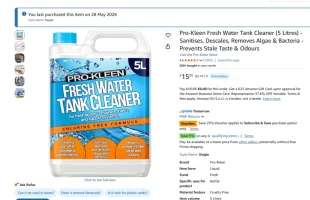
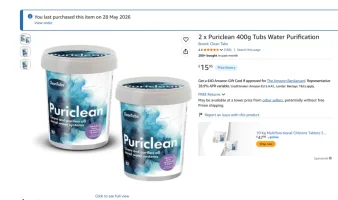
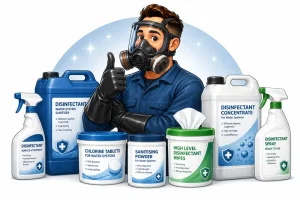
@Dellmassive (Big Bro) has suggested that "Pro-Kleen Fresh Water Tank Cleaner" & "CleanTabs Puriclean" are the favoured products for disinfection in the group, both appear acceptable as they both claim to breakdown and prevent biofilm.
.
How clean is your tank?
How often do you clean your tank?
When should i clean my tank?
What if i dont clean my tank?
Whats all the fuss about anyway?
This comes up now and again, so after fitting my own 60L fresh tank i thought it was time to look into it.
Now i know nothing about water tanks . . i do electrics and mechanicals.
but luckily i know a man who does, My Brother. - Hes the man who knows, so i reached out to him for help.
Hes offered to do us a write up that i can on here for every one.
so over to him . . . . .
Me & Adam at the BTCC the other year,
+++++++++++++++++++++++++++++++++++++++++++++++++++
VAN WATER TANK MAINTENANCE & HYGIENE:
With over 20 years in water treatment and hygiene, I'm well versed in the regulations and guidance for the maintenance of domestic water systems. Although the guidance doesn't apply to homes or indeed campervans, they provide a good basis that we can apply to the campervan environment.
lets get started . . . .
THE DANGER!:
The water tank in your van, if not maintained, could become a silent killer. Just like a diesel heater could fill the van with harmful gas, a water tank could harbour life threatening bacteria without any obvious signs.
Many forms bacteria can growth rapidly in a water tank which can cause minor illness, however our biggest concern is the bacterium Legionella.
If your water tank has been infected with Legionella Pneumophila Bacteria, the stored waters could be atomised or allowed become aerosol through use of a shower head, spray taps or just splash back from the sink, if this aerosol is breathed in the bacteria could infect the lungs resulting in Legionellosis.
THE DISEASE:
Legionellosis infection is a respiratory disease and could take 2 forms.
1. Pontiac Fever - A mild flu like illness.
2. Legionnaires Disease - A severe potentially fatal form of Pneumonia.
Both will start with a cold, then flu symptoms, before moving to Pneumonia in LD.
Incubation period, at which point you notice signs of illness, is 3 to 10 days.
Those more susceptible to the disease are the following.
• Over 50 years of age
• Biological males
• Alcholics
• Smokers
(Anyone ticked all four so far?)
• and the immunosuppressed.
As with most bacteria they are hardy and can survive for extended periods of time in aerosol, as seen in a case in Norway were it was proven that contaminated aerosol infected humans up to 6 miles from the source, therfore you do not need to be in direct contact of the source in your van.
The disease is NOT contagious and there have been zero cases of one human passing the disease onto another, unlike the Covid pandemic.
If caught early enough, modern medicine can treat most cases of the disease.
THE CONTAMINATION:
So how did we get the bacteria in the water tank in the first place?
Well... in truth the bacteria is found I'm many natural water sources such as lakes and streams, however it could also be found in the mains water at home, at a service station filling point or at a camp site drinking point to name a few, although the levels should be extremely low if present, if we do not maintained our water tank and distribution system this potential bacteria could multiply rapidly to dangerous levels and develop biofilm on the tank walls and pipework, creating a safe haven for the bacteria to multiply and re-infect.
And we cant forget the distribution system, we should not only be focused on the tank itself, the pipework connected is also a risk factor.
THE MAINTENANCE:
There are a number of key point for maintaining a healthy water system.
• Keep cold water below 20'C, this minimises binary fission keeping the number of bacteria to a minimum.
• Keep the hot water above 50'C, this kills the bacteria.
• Keep the water moving, stagnation will promote binary fission.
• Keep the system clean.
• Drain down the system.
• Chemical additives.
Easier said then done in a campervan, right?
So let's break these down further...
• Can you maintain constant temperature levels stated above? Well I guess that depends on how advanced your set up is, although I would imagine for most this is not possible, therfore we risk our water operating at temperatures that promotes bacterial growth (20'C - 45'C)
• Can you keep the water moving? Well yes, during travel the tank will slosh about, which will help, however when we state moving we need to think more "turn over", such as using water and flushing through the distribution system such as taps and refilling with fresh cold water. Having a large tank filled with water for 2 weeks with minimal use and no refilling allows for stagnation and bacteria growth.
• Can you keep the system clean? This is more tricky, can you physically clean the inside of the tank or the pipework? Probably not in most cases, especially an underslung tank. Therfore turn-over is critical with chemical intervention.
• "I just drain the tank after each use" Unfortunately this is not a best practice as draining the tank would only be effective if ALL water was removed, which is not possible. Is your drain valve on the side of the tank, maining some water remains? Are you blasting air throught the tank and hoses untill completely dry? Unlikely! Which means after every drain down the residual water can stagnate. Think of the mould that can build up in a bathroom around the bath or sink, or the state of a bucket of water left in the garden for too long, or how a fish tank slowly gets discoloured and smells bad... this could be happening in the tank.
PREVENTION AND CURE:
In reality, the best approach will be chemical additives, however based on all the above we should approach this with either a CURE to an existing tank, or PREVENTION to new un-wetted tank (or just gone through the cure stage)
CURE:
So assuming we have an existing tank and after reading this we realise that maybe the tank maintenance has not been the best and we are worried about contamination. A high strength disinfectant should be added to the tank, however one caveat to this is the chemical type, we need to ensure we use a chemical that can break down the biofilms, for example a chlorine based product will not be able to penetrate the tough slimy outer layer, whereas bromine or chlorine dioxide based chemical can break this down effectively.
Once the correct chemical has been introduced into a FULL tank of water some agitation would be beneficial (a little off-road excursion should suffice), we then want to draw this water through all points of the distribution system, taps, showers and drain points, do this pull through repeatedly over a few hours to retreat the the pipework, as the chemical will deplete in strength as it goes to work so we want to introduce fresh high strength chemical from the tank again and again. Drain these chemicals from the tank and refill and flush multiple times.
PREVENTION:
I would suggest the best method for prevention is......
• In season / in use - Maintain a good turn over of water, running water through taps regularly and consider a safe drinking water additive such as chlorine dioxide tablets with every tank fill, these tabs a common in the off grid camping community.
NOTE - Chlorine Dioxide is a very effective biocide, safe to drink (at the correct levels) and effective at preventing biofilm.
• Off season / between use - maintain at least 50% water volume in the tank with a disinfectant (agitation should allow contact with the whole tank), pull through to taps regularly.
NOTE - Remember that for prolonged periods any chemical additive will likely deplete over time, therefore during extended periods the tank should be dropped every few weeks and refilled with fresh water and chemical whilst still running taps every week. It would also be a good idea to have a sign or bag to place over the taps (whatever works for you), to ensure this water is not consumed by mistake.
@Dellmassive (Big Bro) has suggested that "Pro-Kleen Fresh Water Tank Cleaner" & "CleanTabs Puriclean" are the favoured products for disinfection in the group, both appear acceptable as they both claim to breakdown and prevent biofilm.
.
Last edited: