Diesel heater fitting

mcmac74

Member
T6 Pro
Hi, I've noticed a patch of something steadily growing on our drive which is leaking from a T6.1 camper conversion. Its been in the garage today and I've been advised that source of the leak is from one of the self tapping screws used to connect the diesel heater. Just looking for some advice as to the right /wrong ways to fit heaters, as it'll be going back to converter to fix. Whilst I've no reason to doubt quality of fit, it will be useful to know what I'm talking about. I'll be able to post some photo's later when van collected.

Thanks, Mark
 
Yes, thats what garage have told me
Highly doubt it's anything to do with the self tapper ... possibly just a badly fitted or cracked fuel supply line unless it's leaking from the body of the heater itself.

Edit: Just to add, I fitted one myself in my T5, so I know how they go together.
 
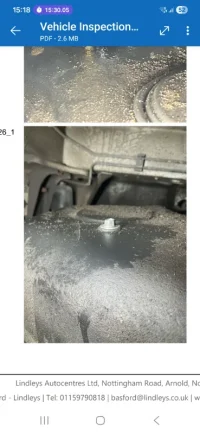
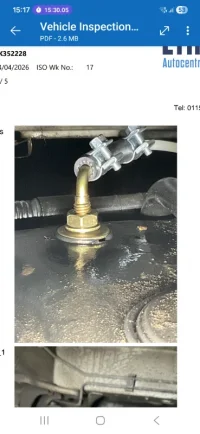
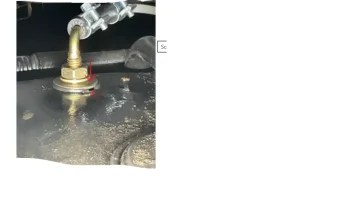
Hi photos attached...definitely appears to be the fitting around tapper. Diesel is pooling on top and then dripping round it would seem...explains why I've not seen any real problem with fuel economy. The extra unexplained tapping screw is a concern too and no idea why its there....

Screenshot_20260424_151803_Outlook.webp

Screenshot_20260424_151750_Outlook.webp
 
Yeh grommet/seal's not right under the brass fitting ... wants taking off and redoing.

And not sure what that random screw though the top (?) of your fuel tank is doing!
 
Yeah, not happy with any of this. Still under warranty so it'll be going back. I've been doing a fair bit of reading on this today, and most advice suggests drilling through the sender unit rather than direct into the tank...should I be requesting this? I'm guessing that doing it that way takes more time as tank has to come off? Also concerned that this will just be patched up and then be a later issue once out of warranty.
 
Yeah, not happy with any of this. Still under warranty so it'll be going back. I've been doing a fair bit of reading on this today, and most advice suggests drilling through the sender unit rather than direct into the tank...should I be requesting this? I'm guessing that doing it that way takes more time as tank has to come off? Also concerned that this will just be patched up and then be a later issue once out of warranty.

Yeah it should be drilled through the sender unit. Or, on some T6.1s there is a blank nipple that can be cut and used on top of the sender unit - hit or miss which has those though
 
Yeah, not happy with any of this. Still under warranty so it'll be going back. I've been doing a fair bit of reading on this today, and most advice suggests drilling through the sender unit rather than direct into the tank...should I be requesting this? I'm guessing that doing it that way takes more time as tank has to come off? Also concerned that this will just be patched up and then be a later issue once out of warranty.
I put mine in the same as yours is, it's fine as long as it's sealed properly.

Tank needs to be dropped either way.
 
Hi photos attached...definitely appears to be the fitting around tapper. Diesel is pooling on top and then dripping round it would seem...explains why I've not seen any real problem with fuel economy. The extra unexplained tapping screw is a concern too and no idea why its there....

View attachment 324123

View attachment 324124
@mcmac74 the self tapper in the photo is a Tek screw with an EPDM washer, EPDM is NOT fuel resistant and will dissolve resulting in a further fuel leak. Demand a replacement tank and take the van elsewhere for a heater installation. That’s a classic example of how not to do it. There is a a Review a Business discussion where you can prevent others suffering the pain
 
Doubt they'll get a replacement tank but seal things up properly (with appropriate materials) and it'll be fine.

And I don't think I'd want whoever fitted that fitting a whole new tank personally.
 
@mcmac74 the self tapper in the photo is a Tek screw with an EPDM washer, EPDM is NOT fuel resistant and will dissolve resulting in a further fuel leak. Demand a replacement tank and take the van elsewhere for a heater installation. That’s a classic example of how not to do it. There is a a Review a Business discussion where you can prevent others suffering the pain

Thanks for the info...The fitter has been good with aftercare so I'm not quite at stage of leaving negative reviews for a small business. He has stressed that it is an approved way of fitting the heater, albeit can't explain why there is the additional screw in, which concerns me.

He has stated" 'it is possible that the seal/gasket has shifted, loosened, or may have a defect, which can sometimes happen under pressure"

My concern is that if it has happened once, it could happen again, but this time out of warranty. How sure are you that that it is that particular washer?

Doubt they'll get a replacement tank but seal things up properly (with appropriate materials) and it'll be fine.

And I don't think I'd want whoever fitted that fitting a whole new tank personally.

It's reassuring to know that others have fitted the heater this way, although fitting into the sender unit seems far more popular (and less exposed )

Mark
 
How sure are you that that it is that particular washer?
100%, it’s a Tek screw, primarily for roofing and cladding. Whatever the reason for the drilling the tank either needs renewing or plugging with a NBR seal that will be fuel resistant.
The 90 deg bulkhead fitting may also have an EPDM seal as it’s a domestic plumbing fitting not fuel system specific.
If it were my van I would be taking it elsewhere and connecting the heater using the tried and tested method
 
100%, it’s a Tek screw, primarily for roofing and cladding. Whatever the reason for the drilling the tank either needs renewing or plugging with a NBR seal that will be fuel resistant.
The 90 deg bulkhead fitting may also have an EPDM seal as it’s a domestic plumbing fitting not fuel system specific.
If it were my van I would be taking it elsewhere and connecting the heater using the tried and tested method
By tried and tested, i assume you mean into the sender unit?
 
Back
Top