Red Cables Under Passenger Seat [Merge]

Thanks both. My mechanic tested the battery when I took it in with the stop start error. Said it was fully charged and holding power. He thought it could be wiring.
I have heard of other van owners having been told the same but that a charge did in fact sort it.
Does it just come up on the MFD with a line through the icon, or have you used a fault reader and noticed some error codes?
 
I have heard of other van owners having been told the same but that a charge did in fact sort it.
Does it just come up on the MFD with a line through the icon, or have you used a fault reader and noticed some error codes?
Thanks for reply. Yes comes up on mfd error stop start. Nothing displays when plugged in though
 
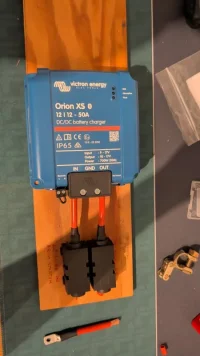
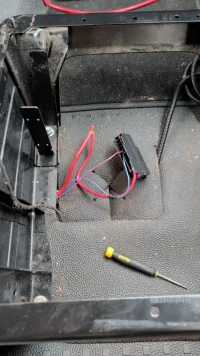
I want to use the thick red wire for my DCDC (victron XS 50A). I believe it's fused at 100A behind the main battery. Should I add a 60A midi fuse just before the DCDC?
 
Definitely go for it. Adding a 60A MIDI fuse right before the DC-DC charger is a smart move for a couple of reasons:

  • Selectivity & Protection: If there’s an overcurrent or a fault at the charger, the 60A fuse will blow first, protecting the Orion XS (which is rated for 50A) before the main 100A fuse is even stressed.
  • Convenience: As you mentioned, the main 100A fuse is buried in the ECU box under the battery—a nightmare to reach on the side of the road. If something goes wrong, it’s much easier to swap a MIDI fuse under your seat than to dismantle the engine bay.
  • Safety: It acts as a local isolation point. If you ever need to work on the DC-DC wiring, you can just pull that fuse instead of disconnecting the main starter battery.
In short: It’s cheap insurance that saves you a lot of headache later!
 
Definitely go for it. Adding a 60A MIDI fuse right before the DC-DC charger is a smart move for a couple of reasons:

  • Selectivity & Protection: If there’s an overcurrent or a fault at the charger, the 60A fuse will blow first, protecting the Orion XS (which is rated for 50A) before the main 100A fuse is even stressed.
  • Convenience: As you mentioned, the main 100A fuse is buried in the ECU box under the battery—a nightmare to reach on the side of the road. If something goes wrong, it’s much easier to swap a MIDI fuse under your seat than to dismantle the engine bay.
  • Safety: It acts as a local isolation point. If you ever need to work on the DC-DC wiring, you can just pull that fuse instead of disconnecting the main starter battery.
In short: It’s cheap insurance that saves you a lot of headache later!
30297.webp
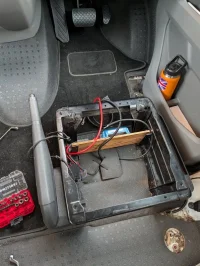
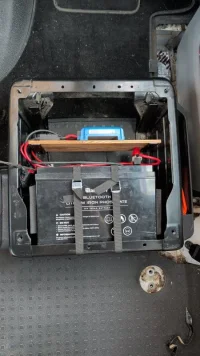
Awesome thanks! I've gone ahead and done exactly that, 60A midi on the input and output (output will connect to a 100A MRBF on the battery)
 
So I've used the thick red wire, it's a 16mm2 wire, used for the factory aux battery if specced. I've also merged the two little fuse boxes into one and removed redundant live cables


30524.jpg
 
Last edited:
  • Like
Reactions: CAB
So I've used the thick red wire, it's a 16mm2 wire, but annoyingly it's fused to two other thick wires that run off to two separate mini fuse boxes. In my case, I had a 20A fuse for the cigarette lighter and another 10A fuse in the other which I think is for occupancy detection (but could be wrong).

VW wired this really weirdly, with wires taped together and it just seemed really inefficient. I tidied it up and moved both fuses to the one big fuse box where the cigarette lighter fuse is. Here there are two thick red wires - one feeds 6 fuse positions and the other just goes to the first pin, but seemingly for no reason so I removed that wire. I moved the 10A fuse onto that fed rail and moved the blue/red wire to the fuse.

I now have two thick red wires, one from the starter battery fuse box and the other going to the fusebox. I have connected both of these together, and they go to the input fuse for my DCDC charger.

Now one fuse box:


View attachment 315478

I know it makes sense to you, but I've read this about 10 times and cant make head nor tale of it.
 
Back
Top