Ok, screenshots as requested

Thank you - that was quick.
First - engine off - to verify the "baseline"
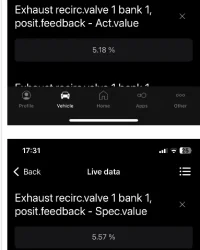
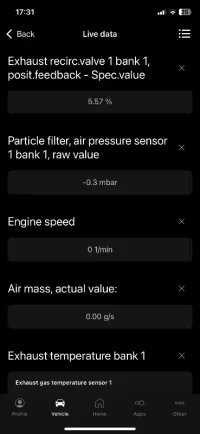
(Above) EGR valve closed - value in the neighbourhood of zero - thus no recirculation. Normal when waiting for cranking start.

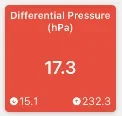
(Above) Pressure across the DPF close to zero (raw value, not compensated for plain zero) - normal.

(Above) Air flow - as expected engine off.
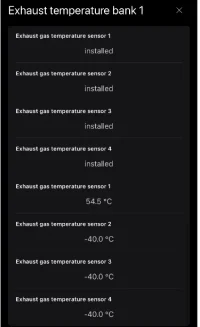
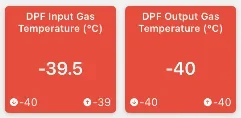
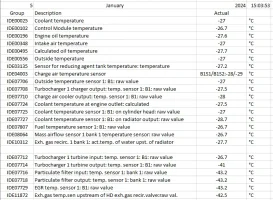
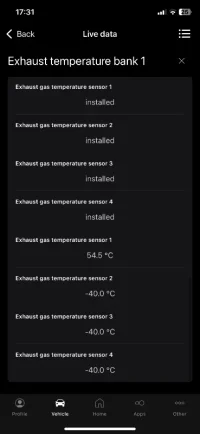
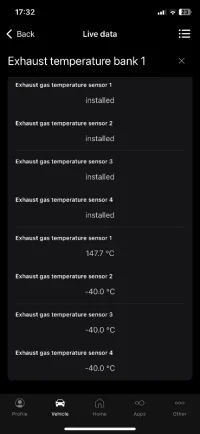
Well, all four sensors are reported as installed but clearly three of them report false values. -40 °C is the minimum many sensors can report, also open circuit would manifest itself as -40°C.
Next - engine idling at 825 RPM
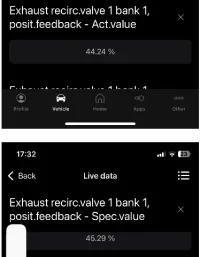
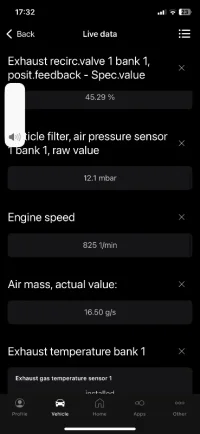
(Above) EGR valve position commanded (specified) and actual position very close to each other as expected. Also the 45% position is normal for idle.
However...

(Above) 16.50 g/s at 825 RPM idle with exhaust gas recirculation at 45% does not match - I'd say EGR valve/cooler has been blanked off. At these conditions normal air flow would be about 8.5 g/s. Thus actually no recirculation, all the air is passed straight through the engine.

(Above) Now also fairly high pressure across the DPF has got the explanation. As engine is sucking double the normal amount of air, naturally also the pressure in the DPF is doubled.
Tailpipe has next to zero soot, very clean, only very light reddish brown residue left on the kitchen roll after rummaging around up there just now
As the pressure reading is alive and seems to give correct numbers AND there is no soot in the tailpipe it looks like the DPF is still in there and working correctly at the moment.
DPF regeneration
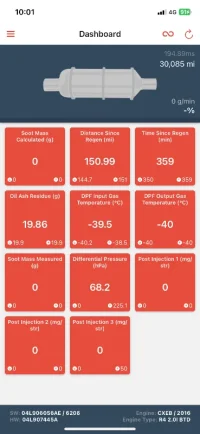
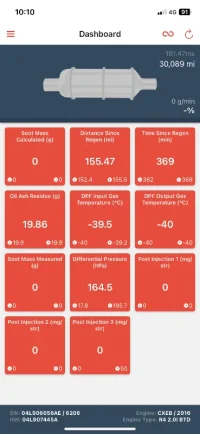
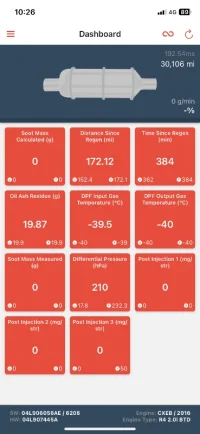
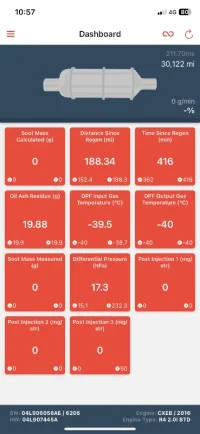
Just to clarify - the data indicates that the last regen finished 188 miles ago (416 minutes) - was the van in your possession at that time?
Yes, it was, regen happened as I pulled into my driveway, at least I assume it was regen, e.g. elevated revs, lots of fan noise and “hot smell” etc
Got it from them and of May, they serviced it and I’m sure he said they carried out a Dpf regen at that point, but that was approx 600+ miles or so ago.
Ok, so the engine somehow actually does DPF regenerations. Also 600 miles without DPF regeneration would have already caused much higher pressures across the DPF.
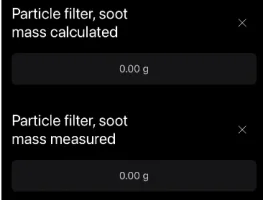
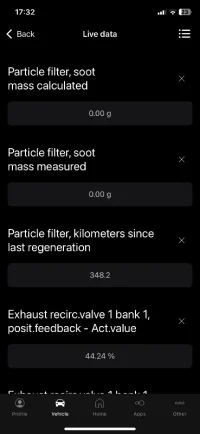
(Above) Normally those values would have changed somewhat during 30 minutes driving in post #1. Normally the calculated is between 6 and 30 grams, the latter being the trigger value for a DPF regen.
AdBlue
Adblue is on the MFD, but shows remaining range - - - - km
Most likely mapped out
My guess -
The DPF regeneration triggering is somehow modified to work without normal soot calculations. Possibly simply based on distance since last regen or possibly time since last regen. It might actually work somewhat. As during the regeneration there is no soot-countdown also duration has to be guessed, but some 20 minutes would be a fairly good guess.
My concern -
Normally the engine regulates DPF temperature based on sensors 2-4 (which all report now -40°C).
Sensor 1 is right off the engine - before turbos.
Sensor 2 is (after turbos) before catalytic converter - the converter raises and stabilises exhaust temperature for DPF regeneration
Sensor 3 measures exhaust temperature entering the DPF
Sensor 4 measures exhaust temperature exiting the DPF
Without sensors 2-4 there is no feedback whether the temperature is too low, or too high. Too low would not be dangerous, just wouldn't clear the DPF fully. Whereas too high temperature might be even catastrofic - normally the DPF regeneration runs at 600...650 °C - so there is not much room for error upwards - before meltdown.



 so wanted to get DPF monitor as it looked more user friendly, then found out it doesn’t like OBD11 so got Carista EVO dongle to use it with.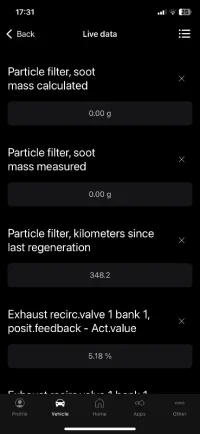
 so that should give me plenty more data, and if there’s going to be any issues, I guess they’ll manifest then.